You cleanse.
You moisturise.
You even bought that serum everybody was talking about.
But somehow, your skin still looks… tired.
Not necessarily dry. Not necessarily broken out. Just flat, uneven and missing that healthy-looking glow you expected your skincare routine to give you.
The frustrating part is that “dull skin” is not one specific skin condition. It is usually the visible result of something else happening: dehydration, buildup, uneven pigmentation, irritation, sun exposure or simply a routine that is not giving your skin what it currently needs.
Dullness is generally used to describe skin that lacks radiance or luminosity. Dehydration and accumulated dead surface cells are among the commonly cited contributors because both can affect how smoothly the skin reflects light.
And no, getting brighter-looking skin does not mean trying to become lighter.
Healthy brightness is about radiance, hydration, smoothness and a more even-looking complexion. Not bleaching your natural skin tone.
So before buying another “glow” product, here are ten reasons your skin might actually look dull.
1. Your Skin Is Dehydrated
This is one of the first places to look.
Dehydrated skin does not contain as much water as it needs. When the skin lacks moisture, its surface can look less plump, less smooth and consequently less luminous.
And dehydration is not limited to people with dry skin.
You can have oily, acne-prone skin and still be dehydrated.
That is why adding more mattifying and oil-removing products every time your face becomes shiny is not always the answer.
What To Do Instead
Build hydration into several parts of your routine.
Look for humectant and moisture-supporting ingredients such as Glycerin, Aloe Vera, Hyaluronic Acid, Beta-Glucan and Propanediol, followed by a moisturiser that helps reduce moisture loss.
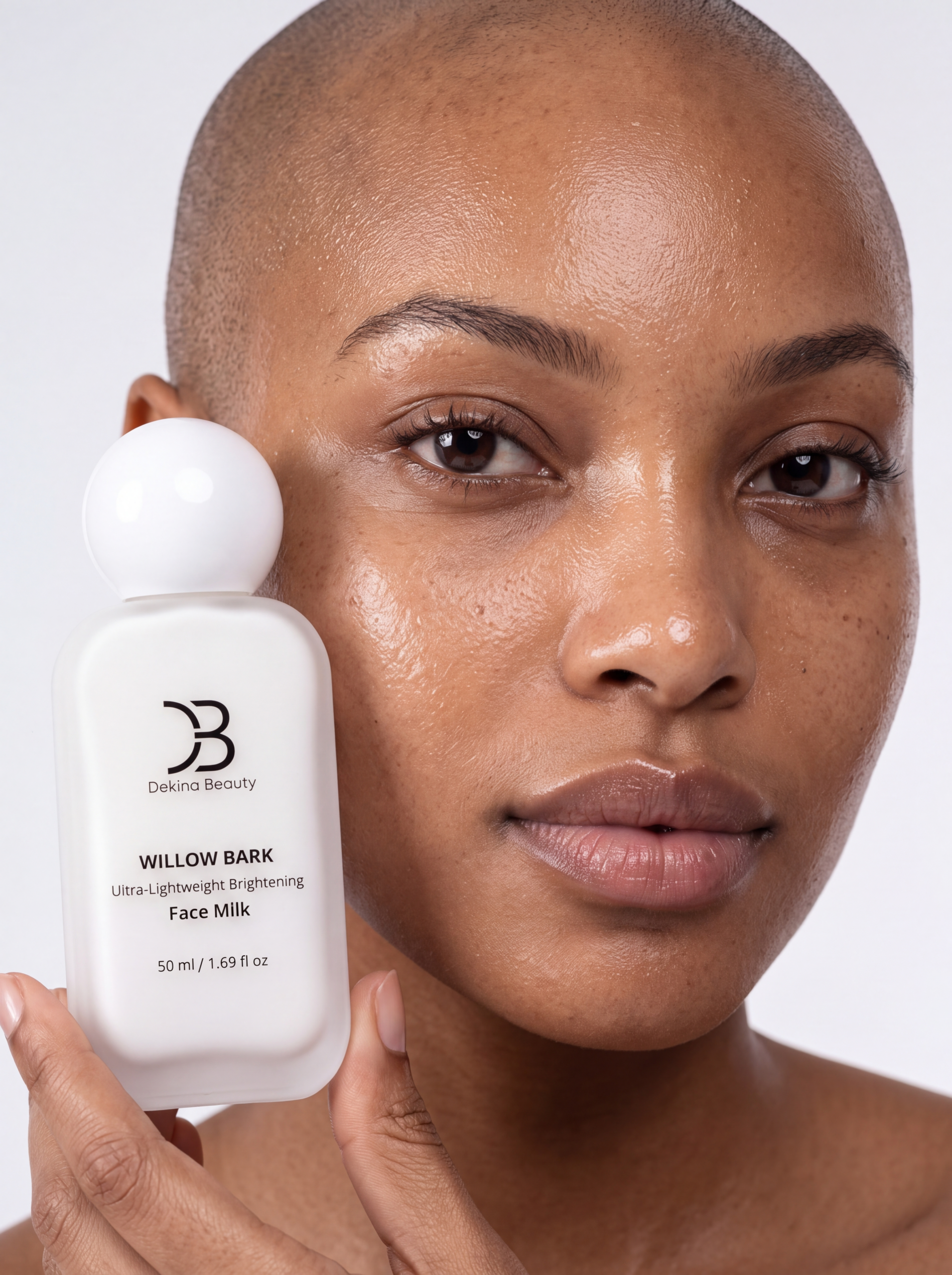
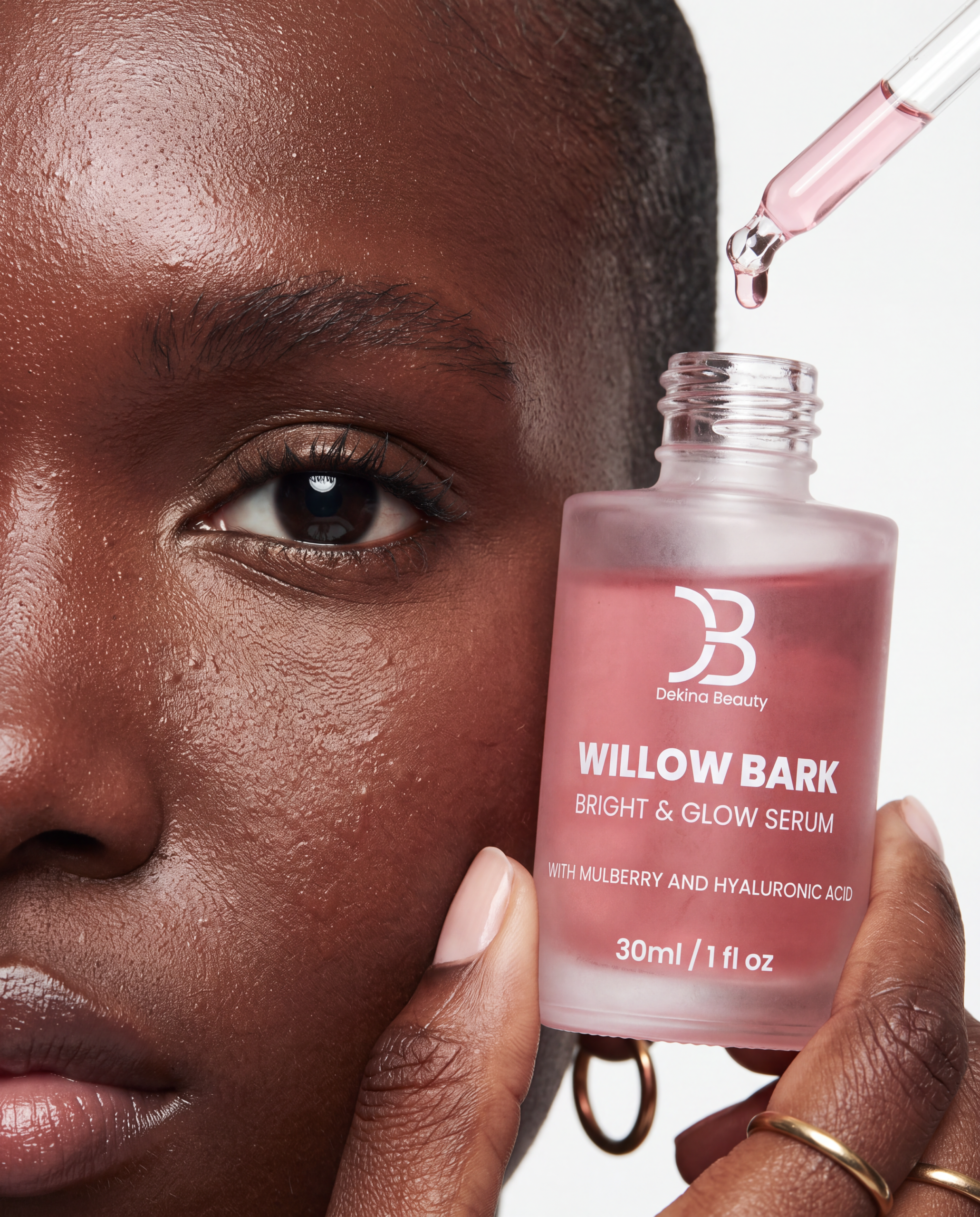
For example, the Dekina Beauty Willow Bark Bright & Glow Serum contains Aloe Vera, Glycerin and Hyaluronic Acid, while the Ultra-Lightweight Brightening Face Milk adds lightweight moisture with Aloe Vera, Beta-Glucan, Propanediol and Squalane.
Hydration does not need to feel heavy.
Especially if you live somewhere hot and humid, a lightweight hydrating routine may feel much more comfortable than repeatedly layering thick creams.
2. Dead Skin Is Building Up On The Surface
Your skin naturally sheds old surface cells.
But when those cells accumulate unevenly, the skin can start looking rough, dry, flaky or simply less radiant.
This is why exfoliation can improve the appearance of dull skin: a smoother surface reflects light more evenly.
But this does not mean you should scrub harder.
What To Do Instead
Think gentle and consistent.
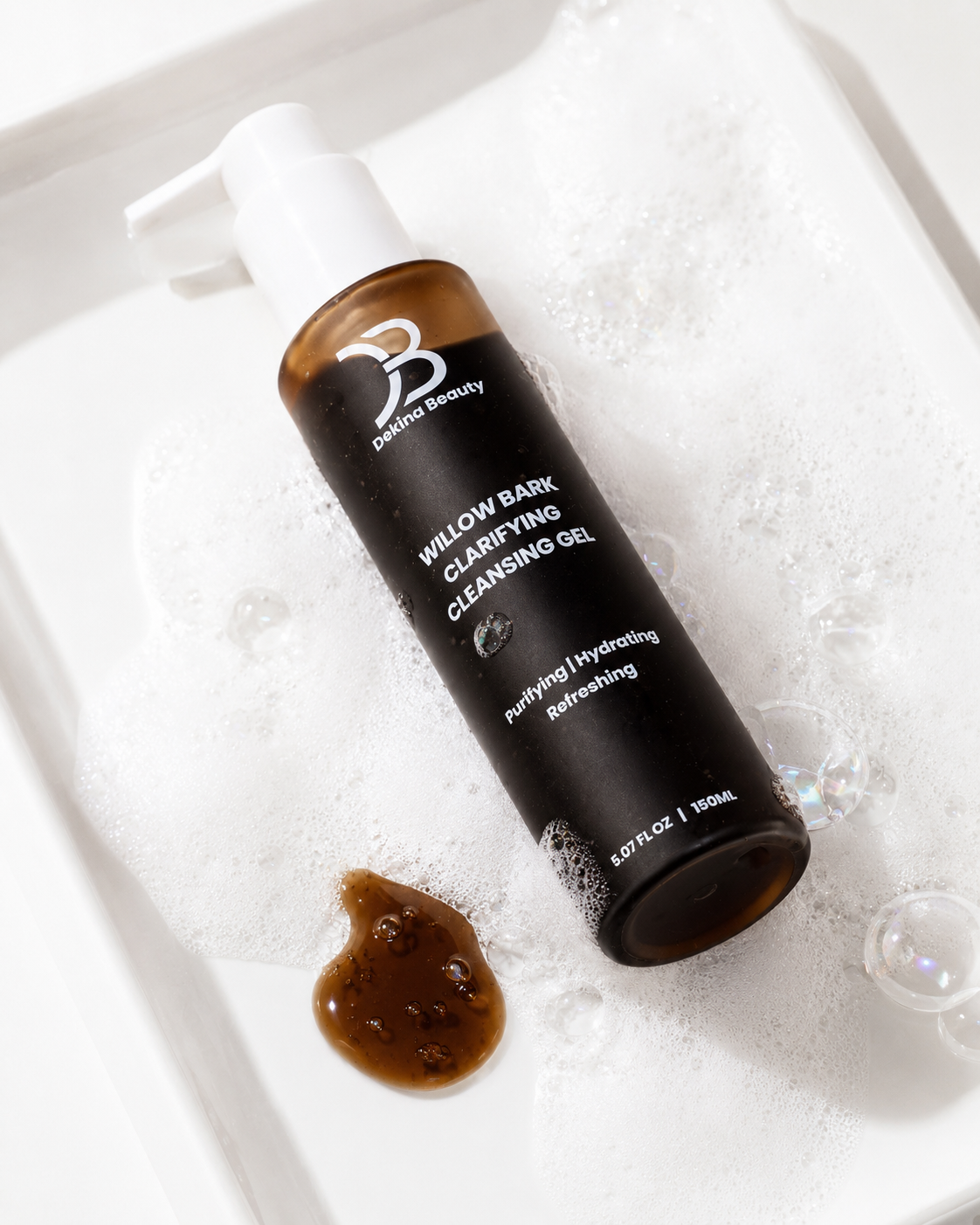
The Dekina Beauty Willow Bark Clarifying Cleansing Gel and Willow Bark Balancing Facial Toner contain Willow Bark, a botanical source of naturally occurring salicylates that can provide mild skin-refining benefits.
If you also use dedicated exfoliating acids in your routine, be careful about how many exfoliating products you combine.
More exfoliation does not automatically create more glow.
Which brings us to the next problem.
3. You Are Actually Exfoliating Too Much
This one catches people by surprise.
You notice dullness.
So you exfoliate.
The skin still does not look how you want it to.
So you add another acid.
Then a scrub.
Then an exfoliating toner.
Then something starts burning.
Over-exfoliation can leave the skin irritated, dry and compromised, which may make it look less radiant rather than more. Recent expert guidance on dull skin similarly cautions against aggressive exfoliation when trying to restore glow.
This is particularly important for melanin-rich skin because inflammation can also contribute to unwanted discoloration.
What To Do Instead
If your face is:
- persistently stinging
- suddenly very sensitive
- unusually tight
- flaky
- red or irritated
- burning when you apply normally comfortable products
do not respond by exfoliating harder.
Simplify.
Focus on gentle cleansing, hydration, moisturising and sunscreen while your skin settles.
Glow should not hurt.
4. Your Skin Is Clean, But Too Clean
There is a difference.
If your cleanser leaves your skin feeling so tight that you immediately want to stretch your face, that is not necessarily a sign that it cleaned better.
Aggressive cleansers and very hot water can remove surface oils and worsen dryness or irritation, which may contribute to a dull appearance.
This matters especially if you are washing your face multiple times a day because Lagos heat has you feeling oily.
What To Do Instead
Use a gentle cleanser morning and evening rather than trying to remove every trace of oil from your skin.
The Willow Bark Clarifying Cleansing Gel was formulated at a skin-friendly pH and is designed to remove excess oil and daily buildup without deliberately stripping the skin.
And use lukewarm water, not extremely hot water.
You are cleansing your face.
You are not washing a frying pan.
5. What You Call Dullness Might Actually Be Uneven Skin Tone
Sometimes the problem is not that the entire face lacks glow.
It is that areas of discoloration make the complexion look less even overall.
Think:
- old acne marks
- areas of hyperpigmentation
- uneven-looking tone
- patches that are darker than the surrounding skin
Post-inflammatory hyperpigmentation is particularly common and noticeable in deeper skin tones, and irritation itself can contribute to new dark marks. Sun and visible-light exposure can also make hyperpigmentation more persistent.
What To Do Instead
Your routine needs to do two things:
Prevent unnecessary new inflammation and support a more even-looking complexion over time.
The Dekina Beauty Bright & Glow Serum combines Licorice, Mulberry and Bearberry extracts for this reason, while the Brightening Face Milk contains Licorice and Mulberry alongside moisturising ingredients.
But do not expect a dark spot that developed over months to disappear in four nights.
Brightening skincare is usually a consistency game.
6. You Are Trying To Brighten Your Skin Without Sunscreen
Imagine filling a bucket that has a hole in the bottom.
That is what some brightening routines look like.
Serum at night.
Brightening toner.
Dark-spot treatment.
No sunscreen in the morning.
Sun protection is one of the most important parts of managing uneven pigmentation. The American Academy of Dermatology recommends SPF 30 or higher for people addressing dark spots and notes that tinted sunscreen containing iron oxide can offer additional protection from visible light, which can worsen pigmentation.
What To Do Instead
Every morning:
Cleanse → Treat → Moisturise → Sunscreen
Not:
Cleanse → Treat → Moisturise → Hope for the best.
And yes, darker skin needs sunscreen too.
Melanin offers some natural protection, but it does not make your skin immune to UV exposure or pigment changes.
7. Your Moisturiser Is Missing From The Routine
There is a strange stage many people go through when trying to achieve glowing skin:
They buy every serum except moisturiser.
Hydrating serum.
Brightening serum.
Exfoliating toner.
Treatment.
Then nothing to help support the skin after all of that.
Moisturising helps support hydration and the skin’s outer barrier. Dull skin is frequently associated with dryness and dehydration, which is why moisturising remains one of the basic recommendations for improving its appearance.
What To Do Instead
Use a moisturiser appropriate for how your skin feels.
If your skin is oily or combination, this does not automatically mean reaching for a thick cream.
The Dekina Beauty Ultra-Lightweight Brightening Face Milk has a fluid, milk-like texture specifically designed to give the skin moisture without an excessively heavy finish.
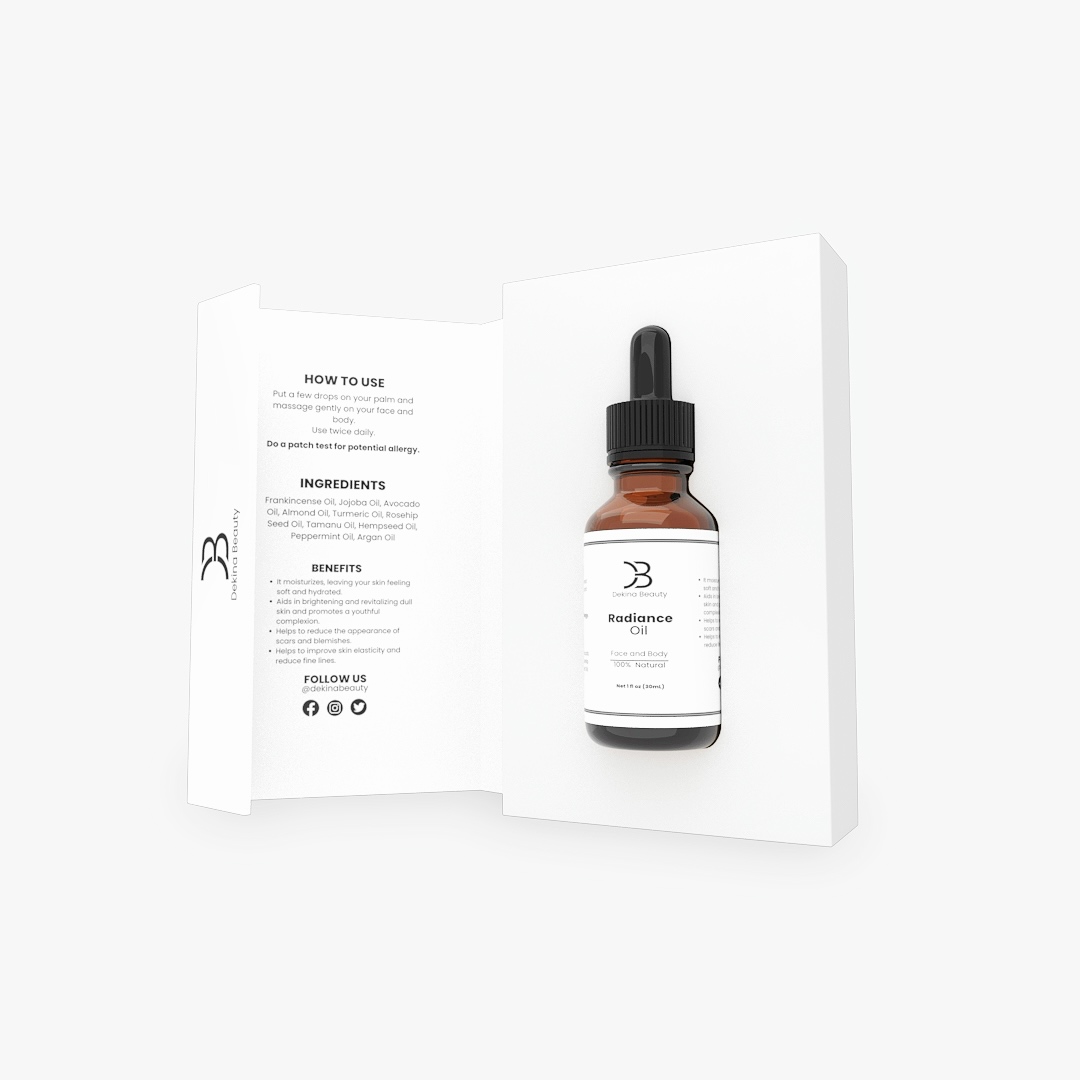
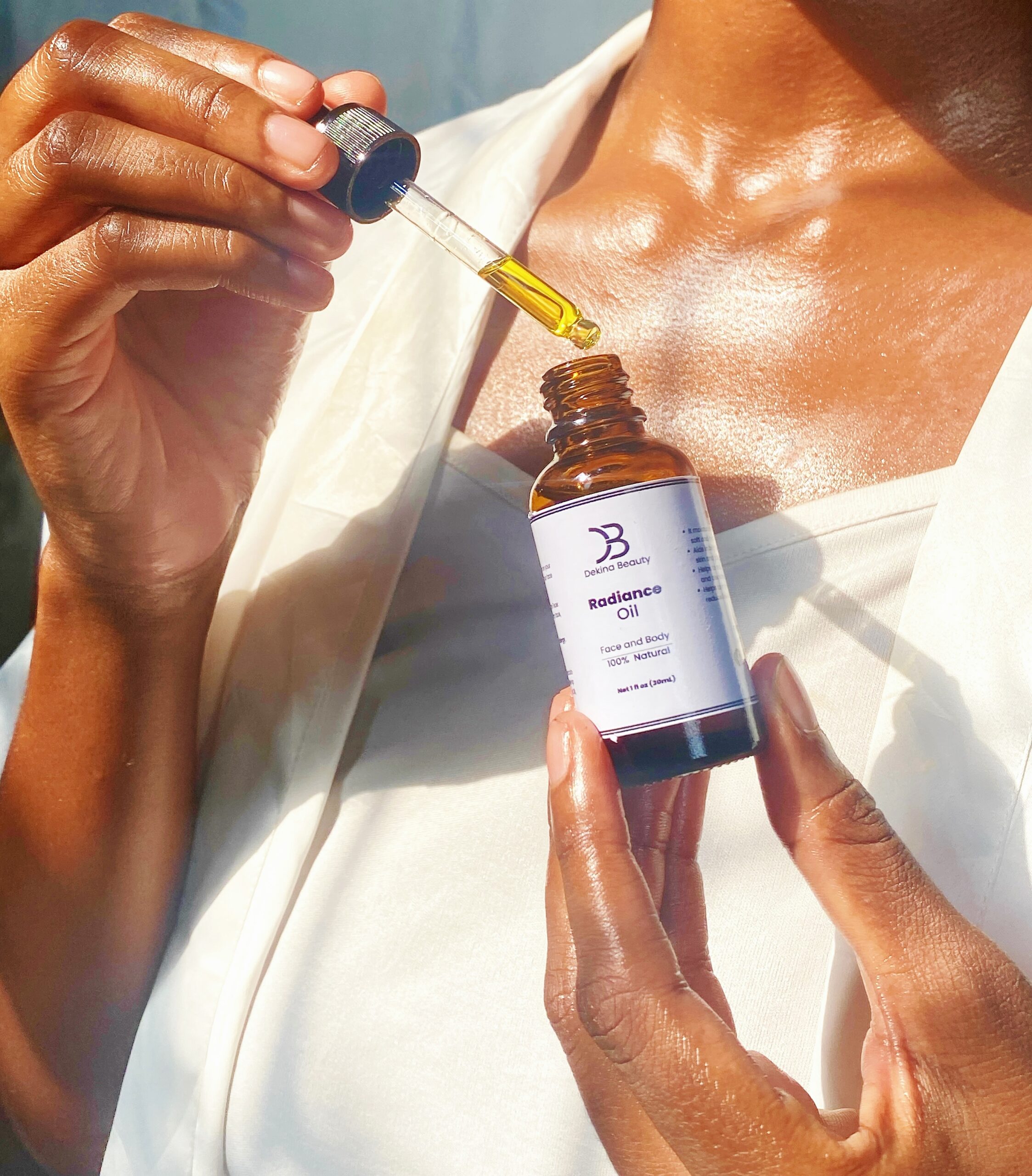
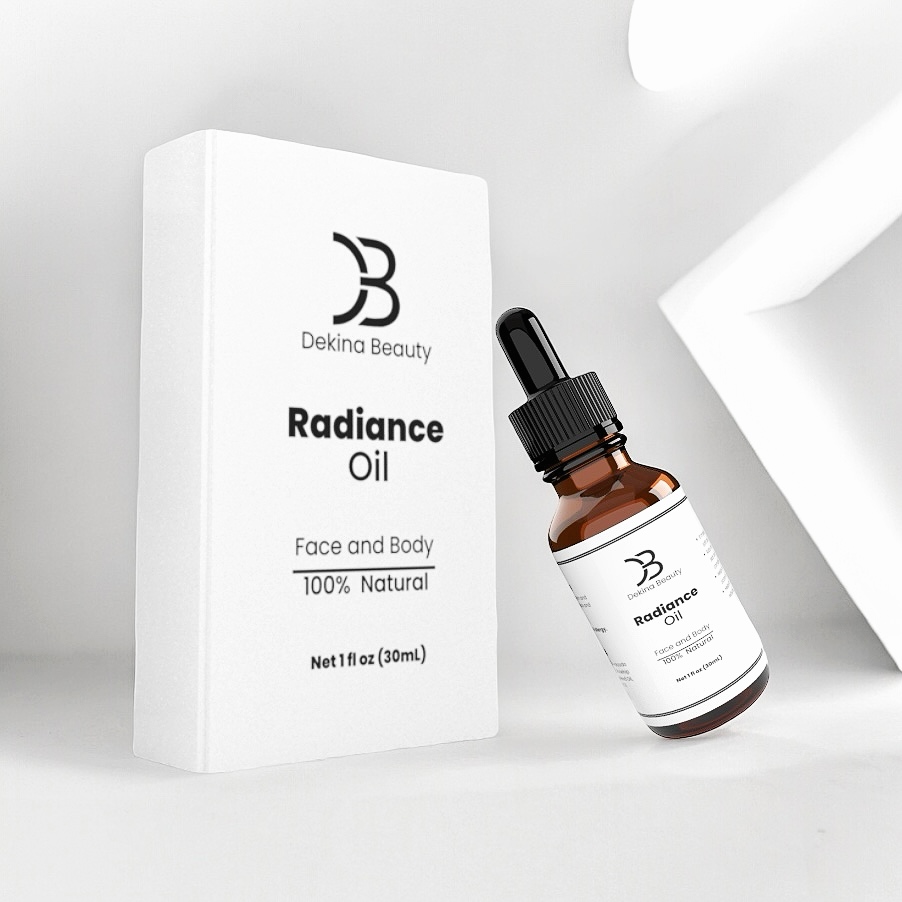
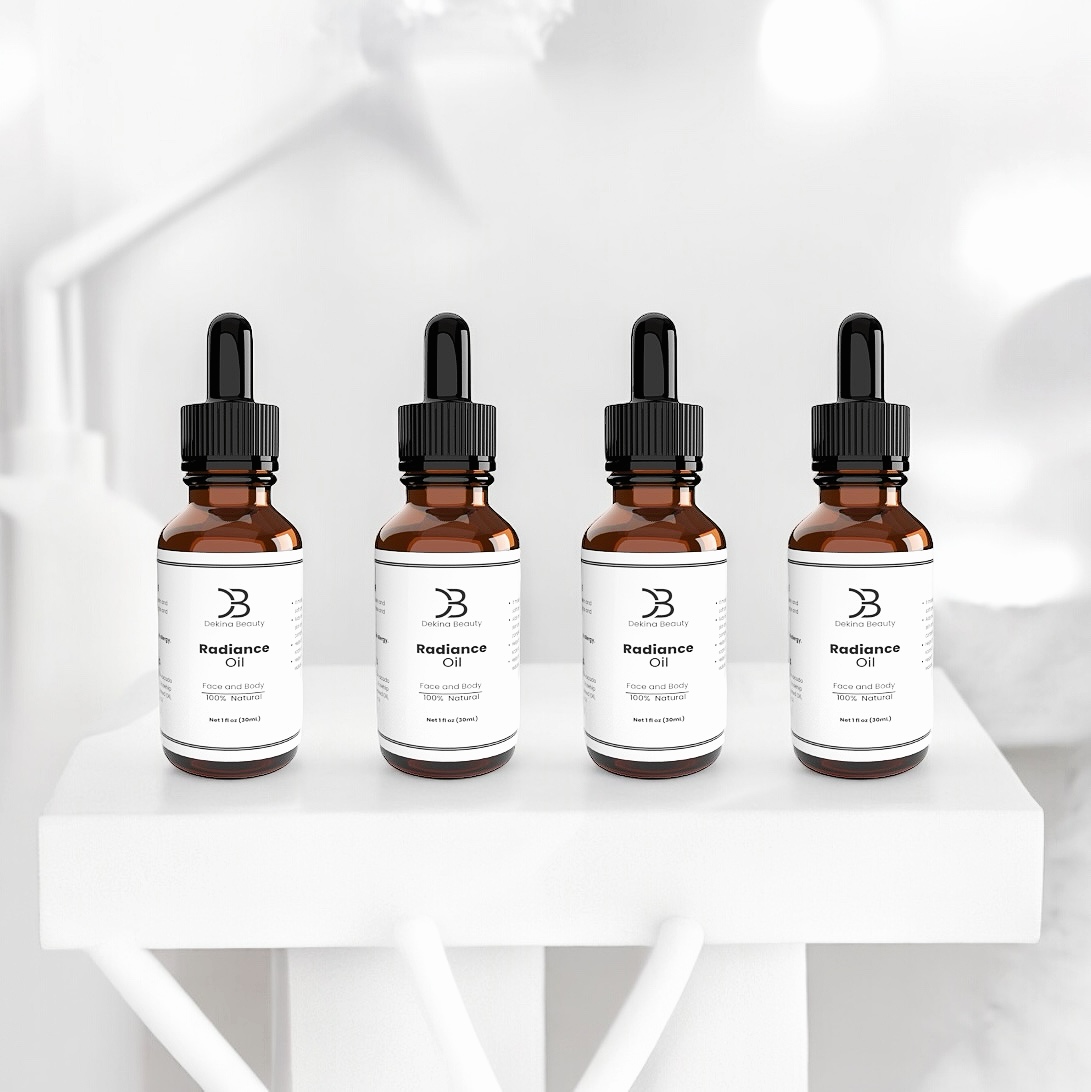
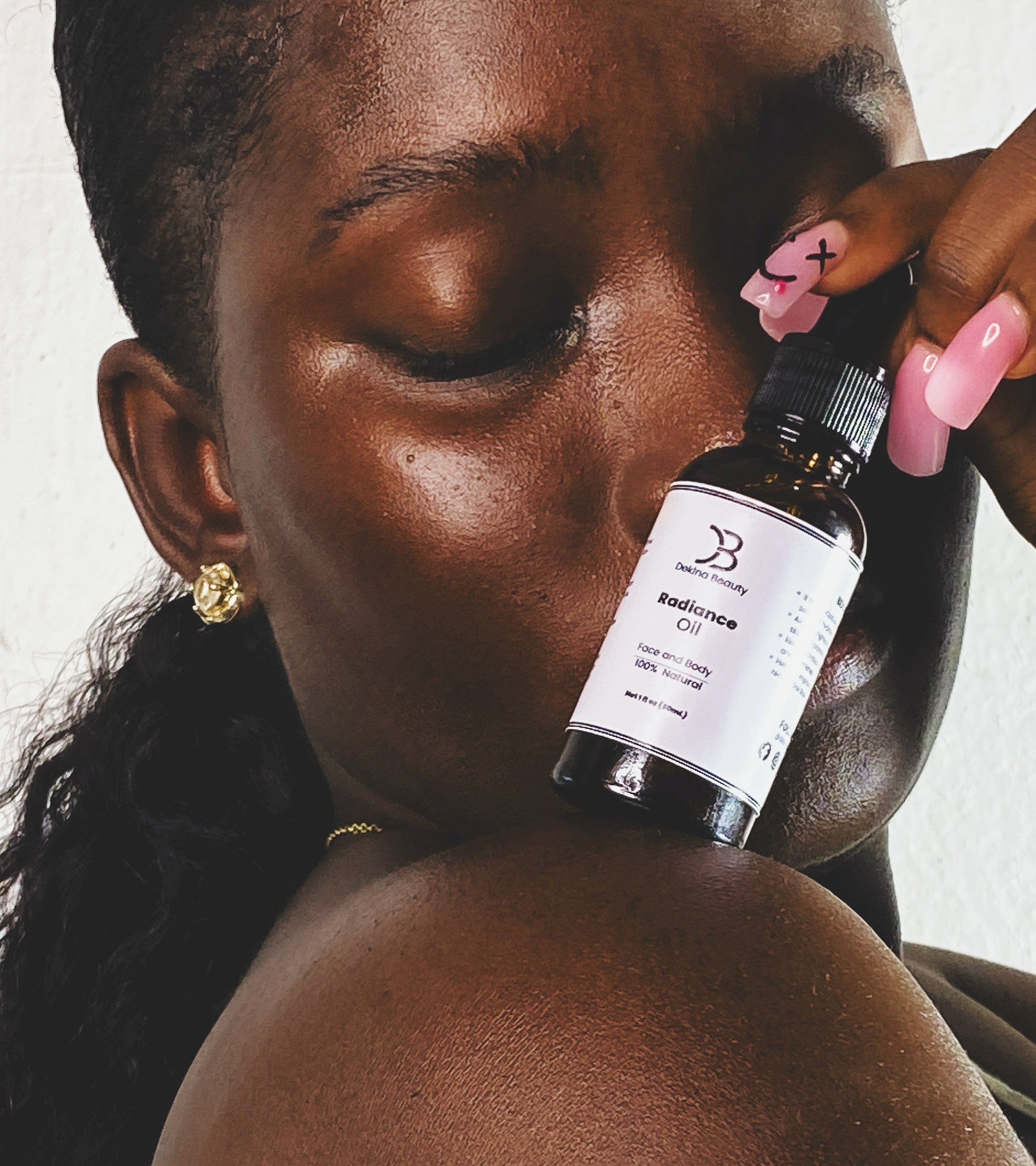
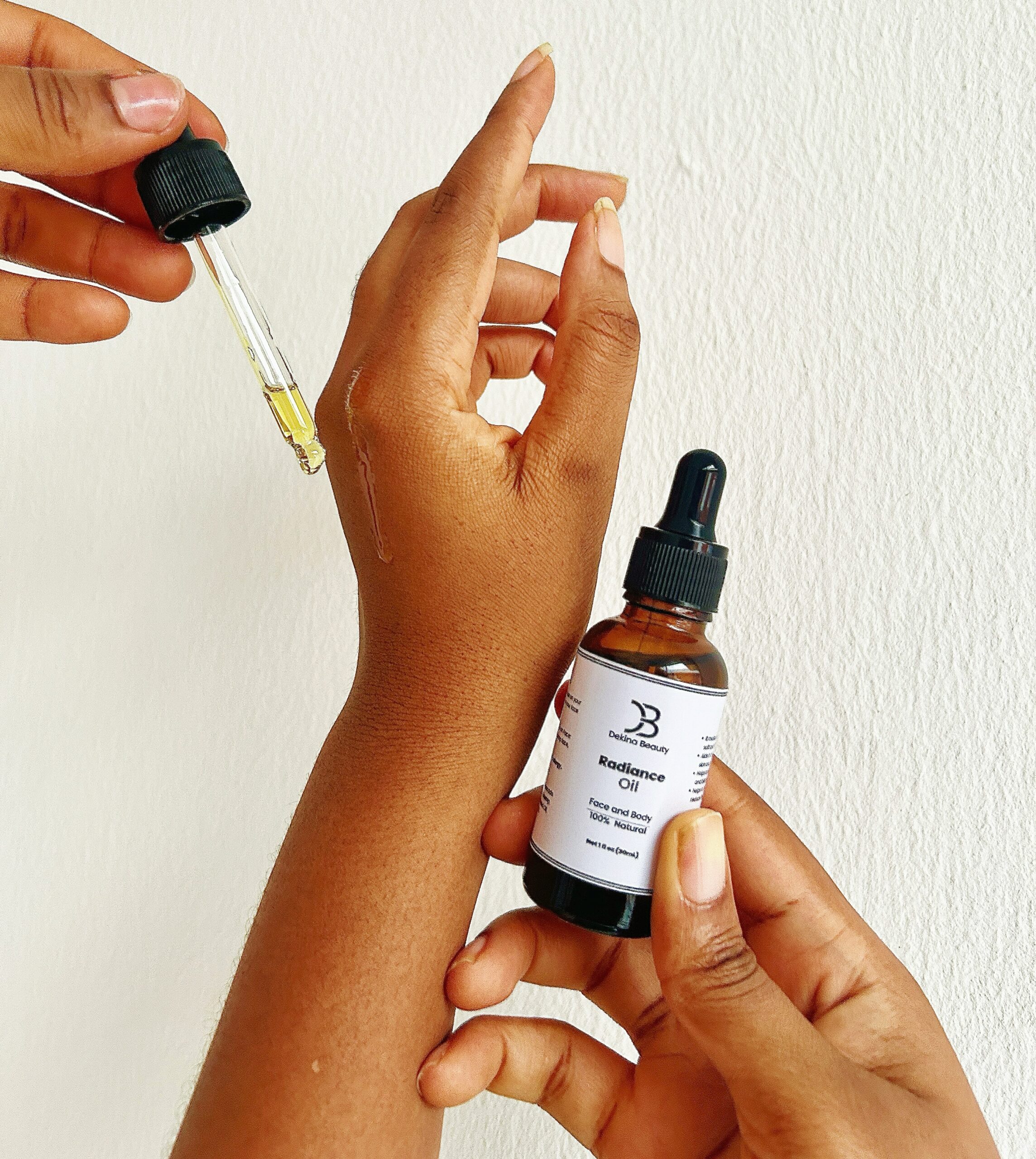
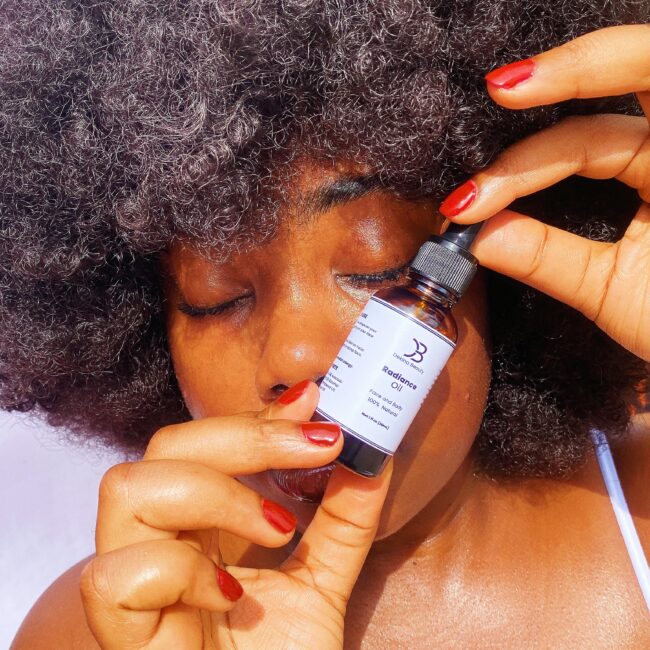
If your skin is dry, you can follow it at night with a few drops of Radiance Oil to help seal in moisture.
The right moisturiser should make your skin feel comfortable.
Not suffocated.
8. You Keep Changing Your Routine
Monday:
New serum.
Thursday:
New toner.
Sunday:
You saw something on TikTok, so now the entire routine has changed.
Two weeks later:
“Nothing works on my skin.”
Your skin has barely had time to tell you whether the first product was working.
Constantly introducing new formulas also makes it much harder to identify what is causing irritation if something goes wrong.
What To Do Instead
Give a well-tolerated routine some consistency.
Take photographs every few weeks in approximately the same lighting rather than examining your face every morning looking for dramatic change.
A simple routine followed consistently is much more useful than a sophisticated routine you keep rebuilding.
For dull or uneven-looking skin, that may simply be:
Morning
Cleanser → Bright & Glow Serum → Face Milk → Sunscreen
Evening
Cleanser → Balancing Toner → Bright & Glow Serum → Face Milk
If your skin needs extra nourishment:
Face Milk → a few drops of Radiance Oil.
That is enough.
9. You Are Confusing Glow With Oil
Shiny does not automatically mean hydrated.
And matte does not automatically mean dull.
This becomes particularly confusing with oily skin because people sometimes assume the natural oil sitting on the surface of their face is the same as healthy radiance.
It is not.
Healthy-looking glow usually comes from a combination of hydration, smoother texture and more even-looking tone.
What To Do Instead
Stop trying to create glow solely by adding oil.
If your skin is naturally oily, your best glow routine may involve more water-based hydration and only a very small amount of facial oil, or none at all.
The Radiance Oil can be useful for people who enjoy an oil step or need additional nourishment, but every skincare product does not need to be used by every skin type every day.
Your routine should fit your skin.
Not the shelf.
10. You Are Looking For An Overnight Glow Instead Of Healthier-Looking Skin
Some products can make your skin look more luminous immediately because they hydrate the surface or leave a dewy finish.
That is different from gradually improving:
- uneven-looking tone
- dark spots
- rough texture
- dehydration
- post-acne marks
Those usually require time.
The internet has made us expect Monday’s dull skin to become Friday’s “glass skin.”
Real skin does not work on content-calendar deadlines.
What To Do Instead
Look for progress, not perfection.
Maybe your skin is:
less dry.
Smoother.
Holding hydration better.
Developing fewer new dark marks.
Looking more even in natural light.
Those changes matter.
And they often happen before the dramatic before-and-after photograph you were waiting for.
So What Does A Routine For Dull Skin Actually Look Like?
You do not need twelve steps.
A good brightening routine needs to cover the fundamentals.
Morning
Step 1: Cleanse
Use the Willow Bark Clarifying Cleansing Gel to remove overnight buildup and excess oil.
Step 2: Brighten & Hydrate
Apply 2–3 drops of Bright & Glow Serum.
Step 3: Moisturise
Apply the Ultra-Lightweight Brightening Face Milk to provide lightweight hydration and support a smoother, more radiant-looking complexion.
Step 4: Protect
Finish with broad-spectrum sunscreen.
Evening
Step 1: Cleanse
Remove sunscreen, makeup and the day’s buildup.
Step 2: Balance
Apply the Willow Bark Balancing Facial Toner according to your skin’s tolerance.
Step 3: Treat
Follow with the Bright & Glow Serum.
Step 4: Moisturise
Apply Brightening Face Milk.
Step 5: Nourish If Needed
For skin that needs additional nourishment, press 1–3 drops of Radiance Oil over your moisturiser.
You do not have to use every optional step every night.
Dull Skin Vs Dark Skin: Let’s Be Clear
This is worth saying explicitly.
Dark skin is not dull skin.
Brightness does not mean making your natural complexion lighter.
When we talk about brightening at Dekina Beauty, we are talking about helping skin look:
more radiant
better hydrated
smoother
more even
healthier-looking
Skin brightening and skin lightening are not the same objective; brightening focuses on luminosity and radiance rather than reducing someone’s natural pigmentation.
Your natural skin tone is not something that needs to be corrected.
When “Dull Skin” Might Need More Than Skincare
Not every change in your complexion should automatically be treated with a cosmetic product.
If you notice a sudden or significant change in your skin, persistent scaling, itching, pain, unusual pigmentation, a rash or another symptom that does not improve, speak with a dermatologist or appropriate healthcare professional.
Sometimes what looks like ordinary “dull skin” can be associated with an underlying skin issue that requires a proper diagnosis.
Do not keep exfoliating something you do not understand.
The Takeaway
If your skin looks dull, your first instinct might be:
I need something stronger.
But very often, the better question is:
What is my skin missing?
Maybe it needs hydration.
Maybe you have dead-skin buildup.
Maybe your pigmentation is making your complexion look uneven.
Maybe you are exfoliating too much.
Maybe your cleanser is stripping your skin.
Maybe sunscreen is the missing step.
Or maybe your routine changes so often that nothing gets enough time to work.
Getting your glow back does not require punishing your skin.
It usually means bringing it back into balance.
Hydrate it. Protect it. Treat it gently. Stay consistent. Then let your skin do the rest.