Hyaluronic acid has been the face of hydration for years.
It is in serums.
Moisturisers.
Masks.
Cleansers.
Even makeup.
Then suddenly, another ingredient started appearing more often in skincare conversations:
Beta-glucan.
And with it came a new claim:
“Beta-glucan is better than hyaluronic acid.”
But skincare science is rarely that simple.
Both ingredients can support hydrated skin, but they are not identical ingredients doing exactly the same job.
Hyaluronic acid is particularly well known for its ability to attract and retain water, while beta-glucan is increasingly interesting because research suggests it may combine moisture-supporting properties with soothing, antioxidant and skin-barrier benefits.
So which one should you use?
Maybe both.
First, What Is Beta-Glucan?
Beta-glucans are naturally occurring polysaccharides, which means they are long chains made from glucose molecules.
They can be found in several natural sources, including:
• Yeast
• Oats
• Mushrooms and fungi
• Barley
• Algae
• Certain bacteria
But this is important:
Not every beta-glucan is chemically identical.
Its structure depends partly on where it comes from.
Different beta-glucans can have different combinations of molecular bonds, molecular weights and biological activity.
That means saying simply:
“This product contains beta-glucan”
does not tell you everything about the ingredient.
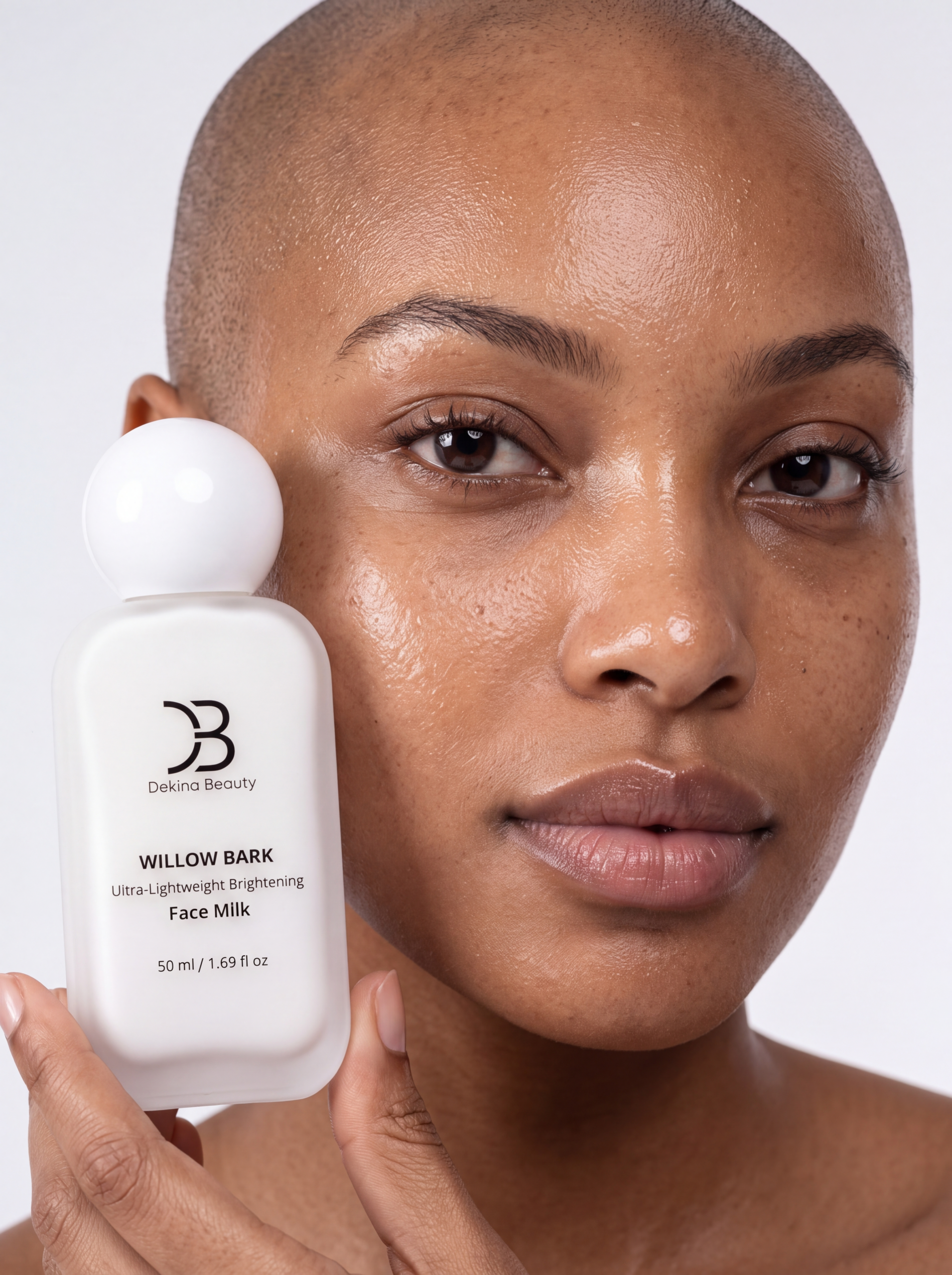
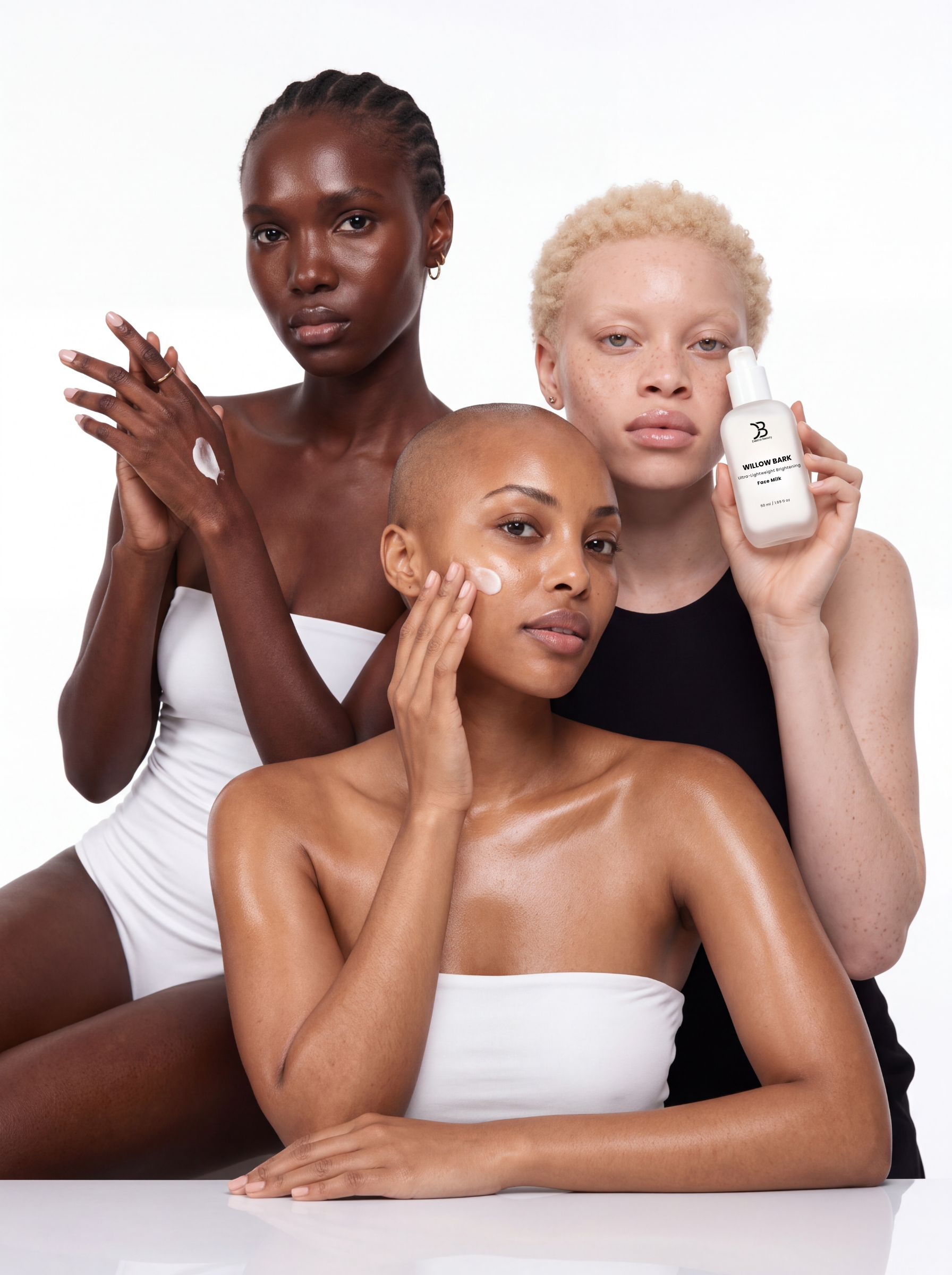
The Willow Bark Ultra-Lightweight Brightening Face Milk, for example, contains Yeast Beta-Glucan.
And that source matters.
What Is Yeast Beta-Glucan?
Yeast beta-glucan is primarily derived from the cell walls of yeast, commonly Saccharomyces cerevisiae.
Its structure differs from beta-glucans found in oats and cereals.
Yeast beta-glucans generally contain β-(1→3) glucose backbones with β-(1→6) branches, whereas cereal beta-glucans such as those from oats have different structural linkages.
Why should you care about something that sounds like organic chemistry homework?
Because structure can influence how a beta-glucan behaves biologically.
Scientific reviews describe beta-glucans as a diverse group rather than one single interchangeable ingredient, with research examining their moisturising, soothing, antioxidant and skin-supporting properties.
So when discussing beta-glucan in skincare, the source and formulation matter.
What Does Beta-Glucan Do For The Skin?
Hydration is part of the story.
But it is not the entire story.
Research into topical beta-glucans has explored several potential skin benefits, including:
Moisture support
Beta-glucans can help support hydration and improve the way dry skin feels.
Soothing activity
Their biological activity has made them particularly interesting for formulas designed around stressed or uncomfortable skin.
Skin-barrier support
Beta-glucans are being investigated for their potential role in supporting skin homeostasis and recovery.
Antioxidant activity
Research has also examined their ability to help protect against oxidative stress.
Inflammation-related pathways
Some beta-glucans interact with biological pathways involved in inflammatory responses, although the exact effects depend heavily on the type and formulation being studied.
This is why beta-glucan is much more interesting than calling it simply “another humectant.”
So What Does Hyaluronic Acid Do?
Hyaluronic acid, or HA, is also naturally present in the human body.
It is an important component of the extracellular matrix and is particularly well known for its relationship with water.
In topical skincare, hyaluronic acid is valued largely because of its hygroscopic properties — essentially, its ability to interact with and retain water.
Topical HA-containing formulations have been studied for improving skin hydration, suppleness and the visible appearance of fine lines associated with dehydration.
This is why your skin can sometimes look noticeably plumper soon after applying a good hydrating HA serum.
It has not permanently removed your lines in five minutes.
Your skin is simply better hydrated.
Is Beta-Glucan More Hydrating Than Hyaluronic Acid?
This is where skincare marketing gets ahead of the science.
You may have seen claims online saying:
“Beta-glucan is 20% more hydrating than hyaluronic acid.”
Or:
“Beta-glucan holds more water than HA.”
Those statements are often repeated without explaining:
What type of beta-glucan?
What molecular weight?
At what concentration?
Compared with what type of hyaluronic acid?
In what formulation?
Measured using what method?
There is good scientific support for both ingredients as moisture-supporting skincare ingredients. There is also growing evidence that beta-glucan has interesting soothing and barrier-related properties.
But there is not enough basis to turn that into the universal statement:
Beta-glucan is simply better than hyaluronic acid.
Formulation matters too much.
Molecular Weight Matters With Hyaluronic Acid Too
Even “hyaluronic acid” is not one completely uniform skincare ingredient.
HA can be formulated in different molecular weights.
Larger molecules tend to remain closer to the surface, where they can contribute to hydration and film formation.
Smaller HA molecules and modified forms may behave differently in formulations and interact differently with the skin.
This is why you may see products marketed as:
Low molecular weight HA
High molecular weight HA
or
Multi-weight hyaluronic acid
Research into topical HA specifically notes that molecular size and formulation influence its cosmetic behaviour.
So comparing “beta-glucan” with “hyaluronic acid” as though both are two single, identical raw materials is already oversimplifying things.
Beta-Glucan Vs Hyaluronic Acid: The Practical Difference
Here is the easiest way to think about them.
Hyaluronic Acid
Think:
Hydration. Plumping. Water retention.
It is especially useful when your skin:
• Feels dehydrated
• Looks less plump
• Feels tight
• Needs lightweight hydration
• Develops fine dehydration lines
Beta-Glucan
Think:
Hydration plus comfort and barrier support.
It may be particularly attractive when your skin:
• Feels dehydrated
• Is easily irritated
• Feels stressed or uncomfortable
• Needs barrier-supportive skincare
• Needs moisture without a heavy texture
Neither description means the other ingredient cannot provide some overlapping benefits.
Their strengths simply make them interesting for slightly different formulation goals.
Why Does The Dekina Serum Use Hyaluronic Acid While The Face Milk Uses Beta-Glucan?
This is where formulation becomes more interesting than asking which individual ingredient “wins.”
The Dekina Beauty Willow Bark Bright & Glow Serum contains Hyaluronic Acid alongside Glycerin and Aloe Vera.
Its role in that formula makes sense:
The serum is a lightweight water-based step designed to deliver hydration alongside botanical ingredients targeting the appearance of dullness and uneven tone.
Then comes the Willow Bark Ultra-Lightweight Brightening Face Milk.
Instead of simply repeating the exact same hydration system, the Face Milk contains:
Yeast Beta-Glucan
Aloe Vera
1,3-Propanediol
Allantoin
Squalane
Vitamin E
This gives the moisturising step a different job.
It is not just about attracting water.
It is about helping the skin feel hydrated, comfortable, soft and supported while reducing moisture loss.
That is why serum and moisturiser do not need identical ingredient lists.
They are supposed to do different jobs.
Can You Use Beta-Glucan And Hyaluronic Acid Together?
Absolutely.
There is no rule saying you have to choose one.
In fact, using them at different stages of a routine can make sense because hydration works best as a system rather than relying on one celebrity ingredient.
For example:
Bright & Glow Serum
provides lightweight hydration with Hyaluronic Acid, Glycerin and Aloe Vera.
Then:
Ultra-Lightweight Brightening Face Milk
adds Yeast Beta-Glucan, Propanediol, Aloe Vera, Squalane and other skin-conditioning ingredients.
One step attracts and supports water.
The next helps moisturise and reduce moisture loss.
That is a much more useful way of thinking about skincare than:
HA vs Beta-Glucan. Fight.
What About Glycerin?
Here is the ingredient nobody gives enough attention to.
Glycerin.
While social media debates Hyaluronic Acid versus Beta-Glucan, glycerin has quietly remained one of the most established humectants in skincare.
It attracts water and works extremely well in properly formulated hydrating products.
The Bright & Glow Serum contains both Glycerin and Hyaluronic Acid, which is another reminder that good formulations usually rely on ingredient systems, not one ingredient doing everything.
Your skin does not care which ingredient is trending.
It cares whether the entire formula works.
Is Beta-Glucan Good For Sensitive Skin?
Its soothing and moisture-supporting properties are one reason beta-glucan has become interesting for formulas intended to support sensitive or stressed skin.
Research reviews describe potential anti-inflammatory and skin-protective activity alongside its moisturising properties.
However, having beta-glucan in a product does not automatically mean the entire formula is appropriate for every sensitive skin type.
A product contains many ingredients.
Your skin responds to the finished formulation, not an ingredient list in isolation.
This is why patch-testing a new product can still be useful if your skin is particularly reactive.
Is Beta-Glucan Good For Oily Skin?
It can be.
Hydration is not the same thing as oil.
An ingredient can help support skin hydration without coating the face in a thick layer of grease.
This is especially relevant for people whose skin is:
Oily but tight.
Shiny but dehydrated.
Acne-prone but uncomfortable after cleansing.
The Face Milk pairs Yeast Beta-Glucan with a fluid, lightweight moisturiser texture specifically so hydration does not have to mean a heavy cream.
If your skin is oily, start with one pump.
Hydrate according to what your skin needs, not according to the idea that oily skin should never be moisturised.
Does Beta-Glucan Repair The Skin Barrier?
“Repairs the skin barrier” has become another phrase skincare brands use very loosely.
Beta-glucan research does suggest roles in skin homeostasis, moisturisation, inflammatory responses and wound-related biological processes.
But in everyday cosmetic skincare, it is more responsible to say that beta-glucan can support the skin’s moisture barrier and help soothe the skin rather than claiming that one moisturiser medically “repairs” every damaged barrier.
Barrier health also depends on the rest of your routine.
If you apply beta-glucan and then exfoliate your face aggressively every night, the ingredient cannot rescue every skincare decision you make.
Do You Need Beta-Glucan If You Already Use Hyaluronic Acid?
Not necessarily.
Skincare is not Pokémon.
You do not need to collect every hydrating ingredient.
If your HA product keeps your skin comfortable and your moisturiser works well, there is no emergency requiring beta-glucan.
But beta-glucan can be especially interesting if you are looking for a moisturising ingredient that offers more than the classic humectant story.
It becomes less about:
“What is missing from my ingredient collection?”
And more about:
“What does my skin need?”
A Simple Hydration Routine Using Both
If your skin feels dehydrated, tight or less comfortable than usual, your routine can remain straightforward.
Morning
Step 1: Cleanse
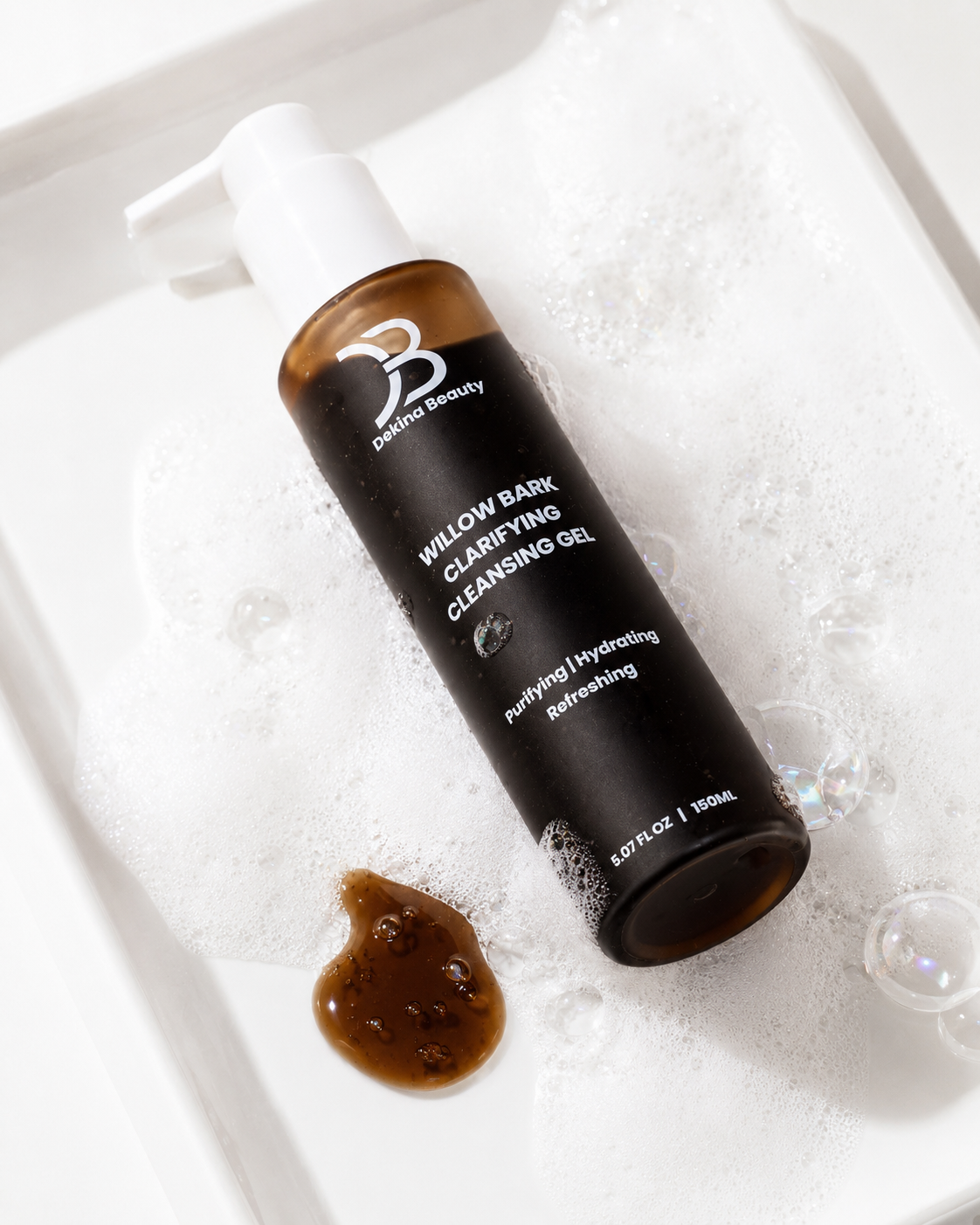
Use the Willow Bark Clarifying Cleansing Gel.
Step 2: Hydrate
Apply 2–3 drops of Willow Bark Bright & Glow Serum with Hyaluronic Acid.
Step 3: Moisturise
Apply Willow Bark Ultra-Lightweight Brightening Face Milk with Yeast Beta-Glucan.
Step 4: Protect
Finish with sunscreen.
Evening
Cleanser
Bright & Glow Serum
Ultra-Lightweight Brightening Face Milk
If you use the Willow Bark Balancing Facial Toner, apply it between cleansing and serum according to your skin’s tolerance.
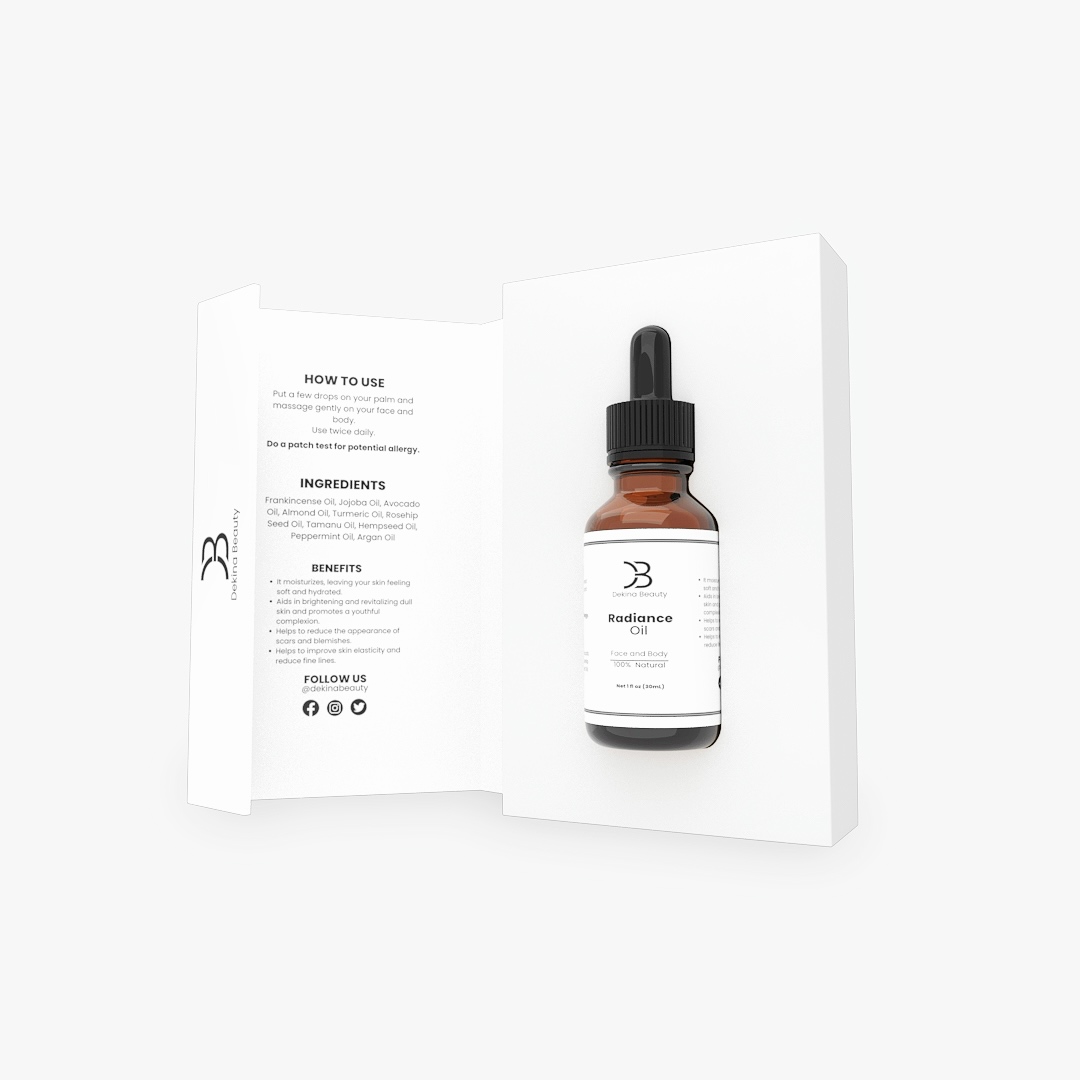
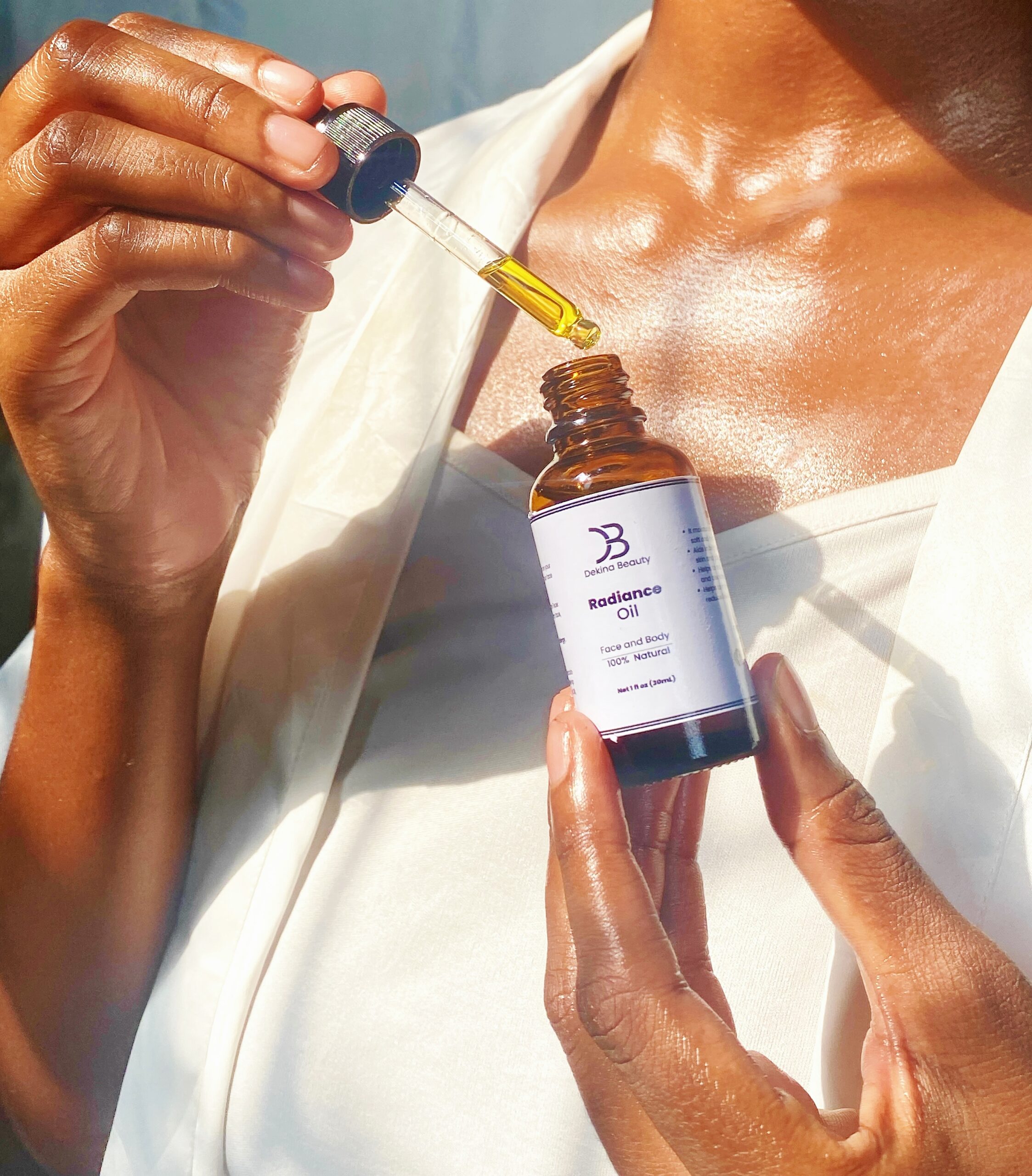
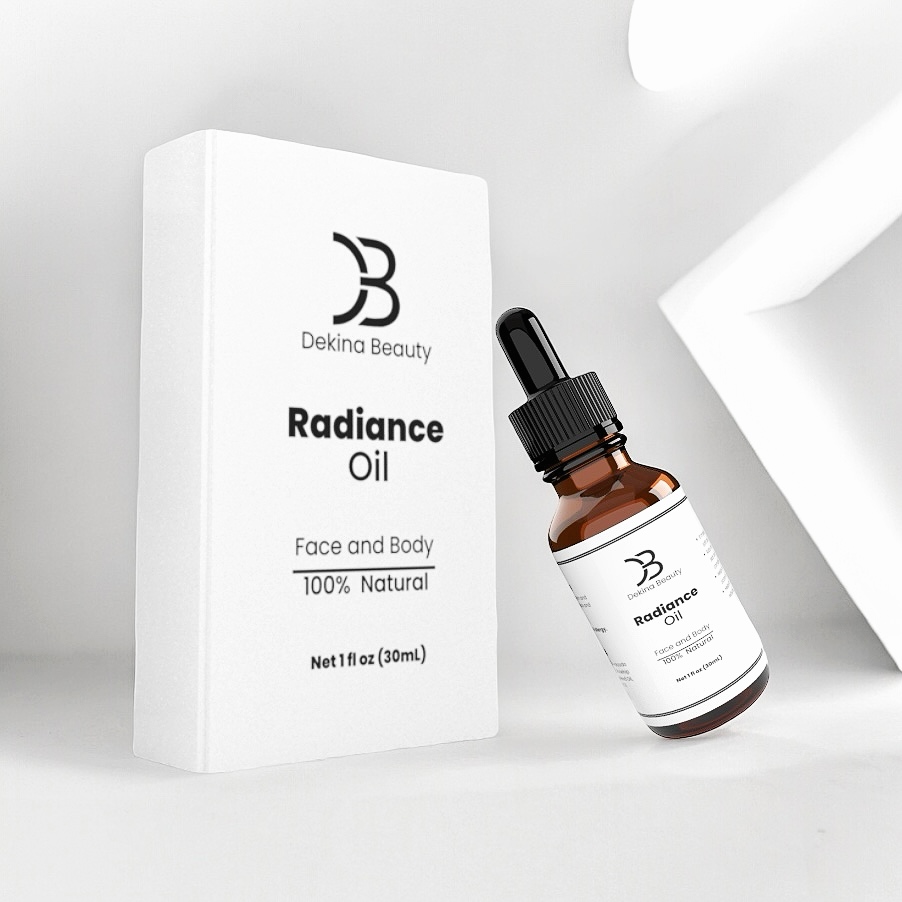
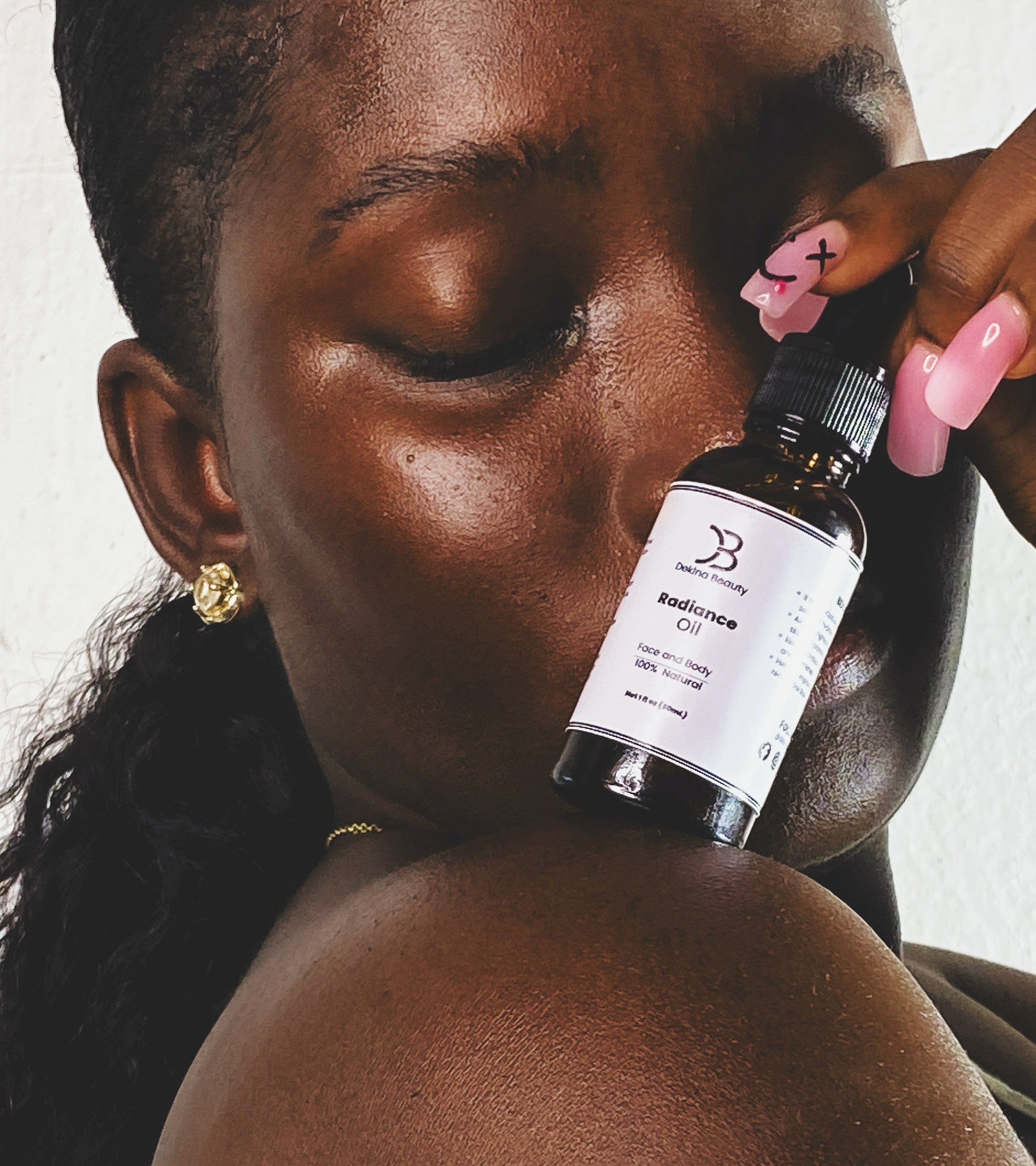
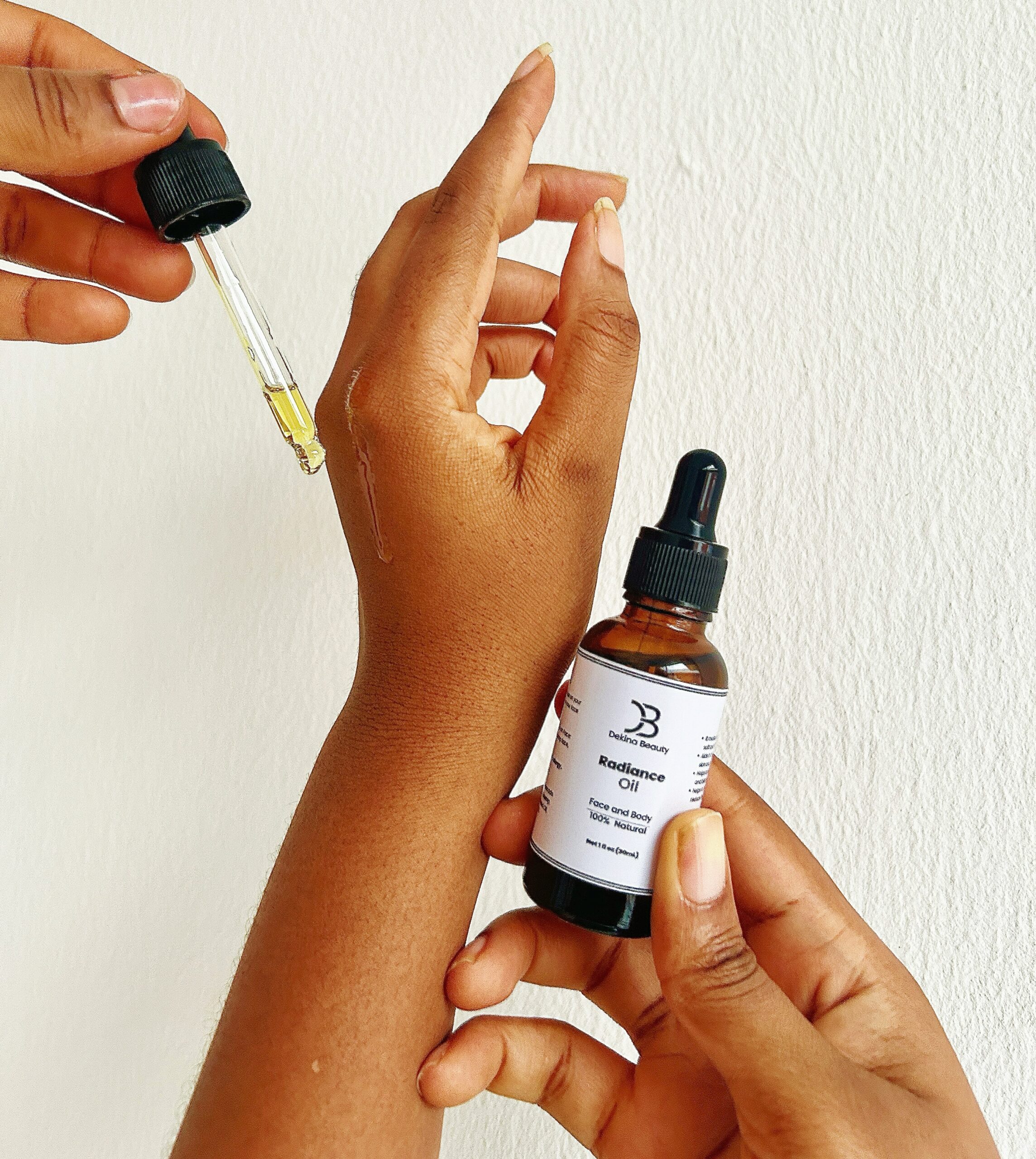
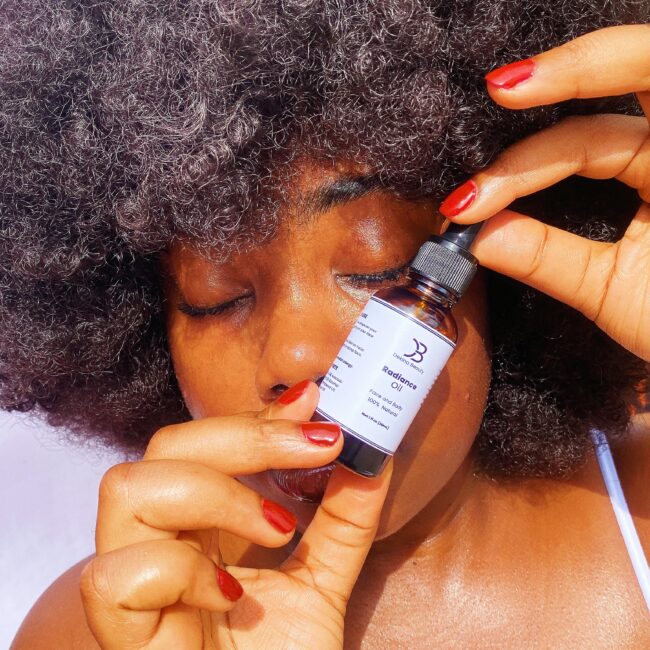
For drier skin, a few drops of Radiance Oil can be added after Face Milk at night.
So Which One Is Better?
Neither wins automatically.
If you want a lightweight ingredient with extensive evidence and a strong reputation for improving skin hydration, Hyaluronic Acid makes sense.
If you want hydration alongside an ingredient being studied for soothing, antioxidant and barrier-supporting properties, Beta-Glucan is extremely interesting.
And if a formulation uses both concepts intelligently?
There is no reason your skin needs to choose sides.
The Takeaway
Beta-glucan deserves more attention.
But not because we need to dethrone Hyaluronic Acid and crown a new internet hydration king.
The science is more interesting than that.
Hyaluronic Acid is an established skincare ingredient with strong evidence supporting its ability to improve skin hydration and contribute to plumper, smoother-looking skin. (PubMed Central (PMC))
Beta-glucans are a diverse family of polysaccharides being studied for moisturising, soothing, antioxidant, anti-inflammatory and skin-supporting properties, with their exact activity depending partly on their source and structure. (PubMed Central (PMC))
And Yeast Beta-Glucan is not automatically identical to oat or mushroom beta-glucan.
That is the part ingredient labels rarely explain.
So the better question is not:
Beta-Glucan or Hyaluronic Acid?
It is:
What role is each ingredient playing in the formula?
Because good skincare is rarely built around one superstar ingredient.
It is built around ingredients that make sense together.