When people think of ingredients for dark spots, the usual names come up first.
Niacinamide.
Vitamin C.
Alpha Arbutin.
Maybe Kojic Acid.
Licorice Root Extract rarely gets the same attention.
Yet it is sitting inside many well-formulated brightening products for a reason.
Licorice is more than a soothing plant extract added to make an ingredient list sound botanical. Its root contains several compounds studied for their effects on pigmentation, inflammation and uneven skin tone.
And one of the most interesting is called glabridin.
Why Do Dark Spots Form In The First Place?
Think about what often happens after a pimple.
The breakout becomes inflamed.
Eventually, the pimple disappears.
But a brown or darker mark stays behind.
That lingering mark is often post-inflammatory hyperpigmentation, or PIH.
Inflammation can stimulate pigment production, particularly in melanin-rich skin. This means managing dark spots is not only about trying to reduce visible pigment after it appears.
It also makes sense to think about the inflammation that helped create the mark in the first place.
This is where Licorice becomes especially interesting.
Meet Glabridin: One Of Licorice Root’s Brightening Compounds
Licorice Root contains several biologically active compounds, and glabridin is one of the best studied in pigmentation research.
One way it works is by influencing tyrosinase, an enzyme involved in the production of melanin.
But what makes glabridin more interesting is that research also points to activity involving inflammatory pathways and other stages of pigmentation biology. A recent scientific review describes glabridin as acting across several mechanisms, including tyrosinase activity, melanogenic signalling and melanosome-related processes.
In simpler language:
It is not approaching uneven pigmentation from just one direction.
Why Does The Soothing Side Matter?
Imagine you are trying to fade the dark marks from acne while your routine is simultaneously making your skin:
Dry.
Burning.
Flaky.
Red.
Irritated.
You may be working against yourself.
Inflammation and pigmentation are closely connected, particularly in skin that is prone to post-inflammatory dark marks.
Licorice is interesting because compounds within the extract have been studied for both brightening and anti-inflammatory activity. Glabridin, for example, has been associated with tyrosinase inhibition as well as anti-inflammatory effects.
That is a useful combination for a brightening routine.
You want to improve uneven-looking tone without treating your face like something that needs to be scrubbed into submission.
Licorice Root Contains More Than Glabridin
This is something ingredient marketing often skips.
Licorice Extract is not one isolated molecule.
Another interesting compound found in Licorice is liquiritin.
And unlike glabridin, its pigmentation story is not primarily about inhibiting tyrosinase.
Research suggests liquiritin may help through dispersion and removal of existing melanin.
That means even within one botanical ingredient, different compounds may interact with pigmentation in different ways.
This is why simply describing Licorice as “a natural brightener” does not really do the ingredient justice.
Why Licorice Is In The Dekina Beauty Range
At Dekina Beauty, Licorice is not there as a supporting character nobody notices.
It plays an important role across several formulas.
Willow Bark Bright & Glow Serum
Here, Licorice Root Extract works alongside Mulberry and Bearberry extracts.
Mulberry brings compounds associated with pigmentation pathways such as oxyresveratrol.
Bearberry naturally contains arbutin-related compounds.
Licorice adds its own brightening and soothing chemistry.
Then Aloe Vera, Glycerin and Hyaluronic Acid help maintain hydration.
The result is a serum designed to target dark spots, post-breakout marks, dullness and uneven-looking tone without making brightening synonymous with dryness.
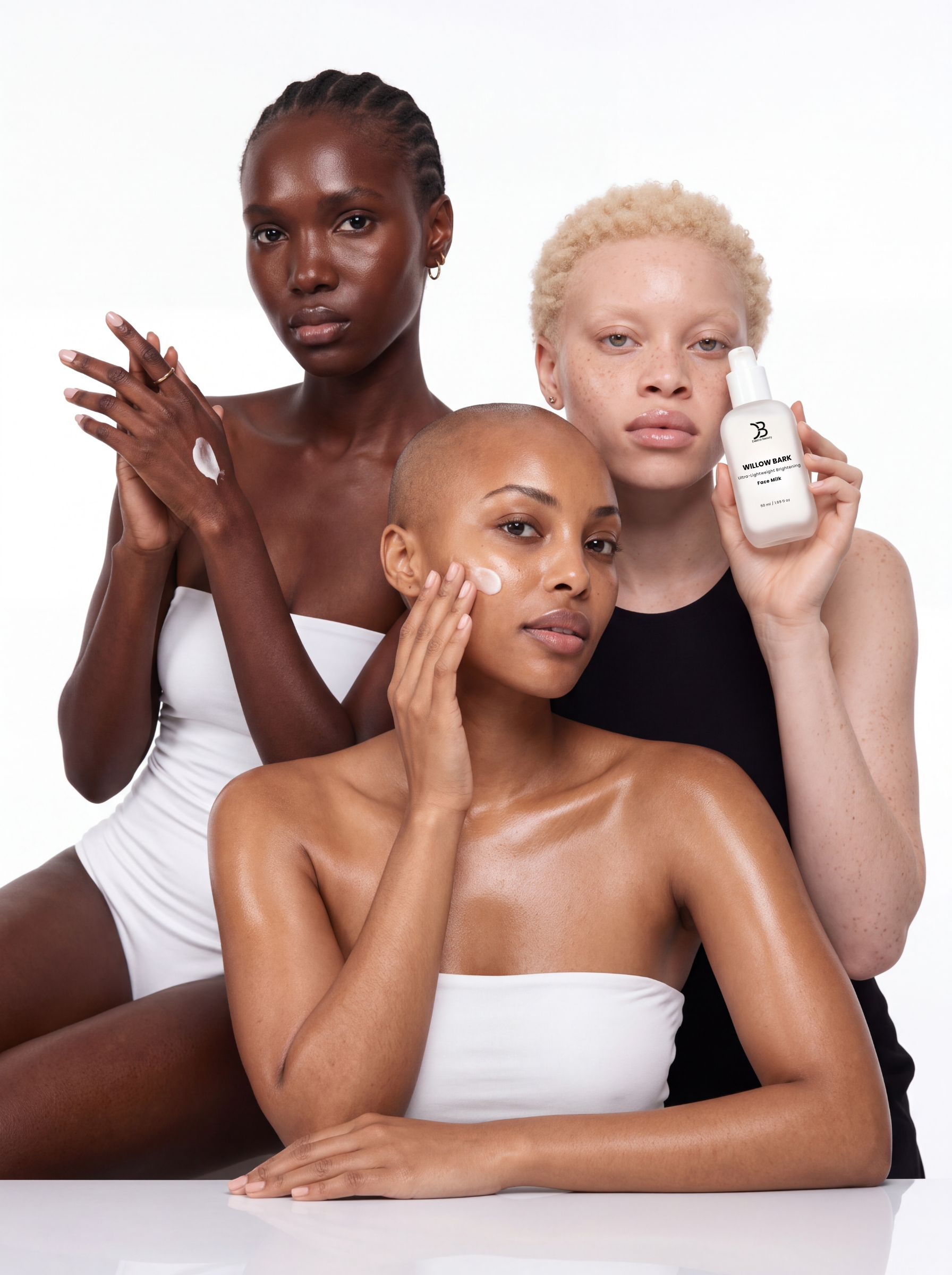
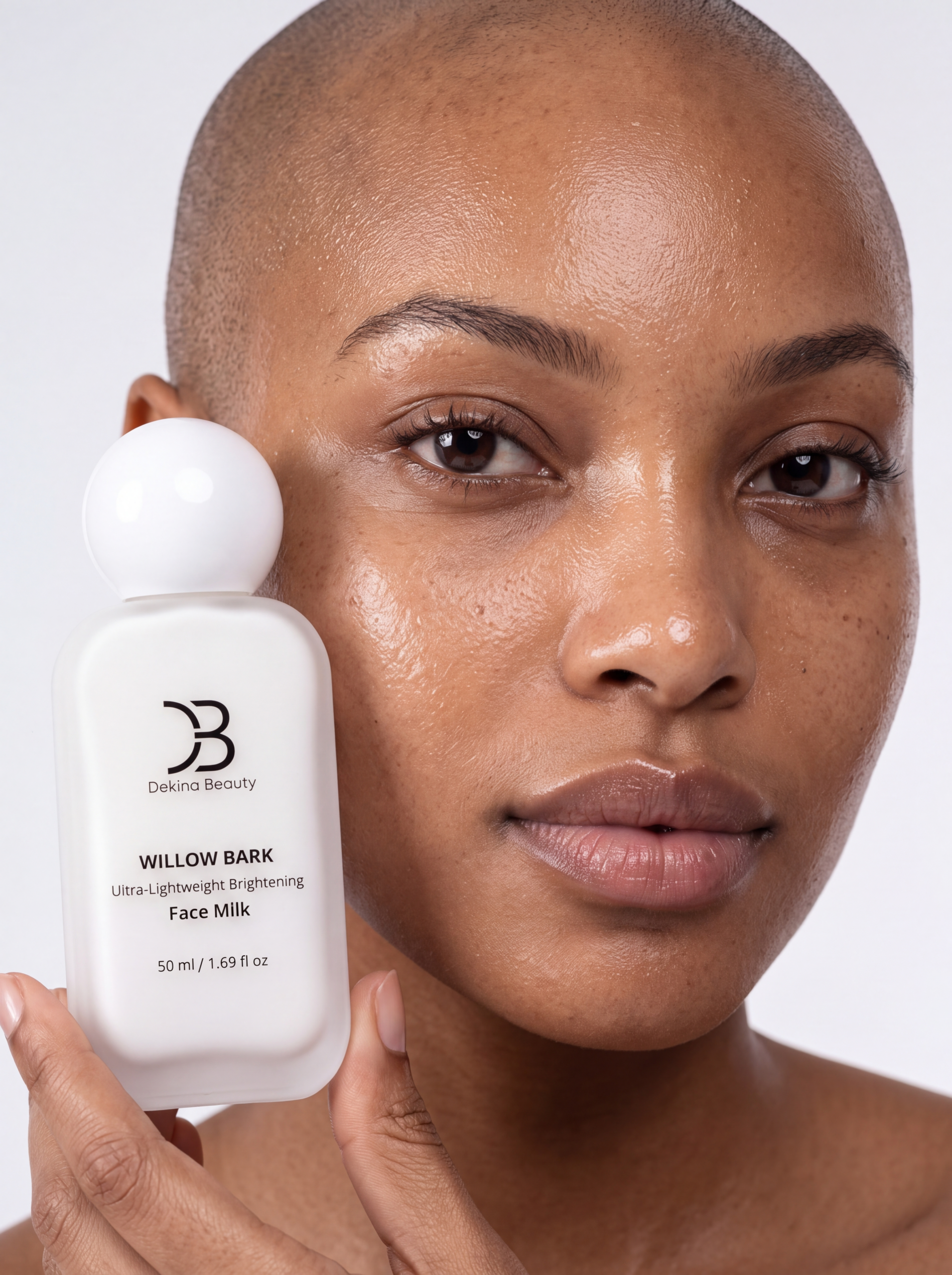
Willow Bark Ultra-Lightweight Brightening Face Milk
Licorice also appears in the Face Milk.
But here, it is surrounded by a different supporting system:
Mulberry Extract for additional brightening support.
Yeast Beta-Glucan for hydration and comfort.
Allantoin to soothe.
Squalane to soften and help reduce moisture loss.
Aloe Vera to hydrate and calm.
So your moisturising step is not simply putting moisture back into the skin.
It continues supporting the appearance of a brighter, more even complexion.
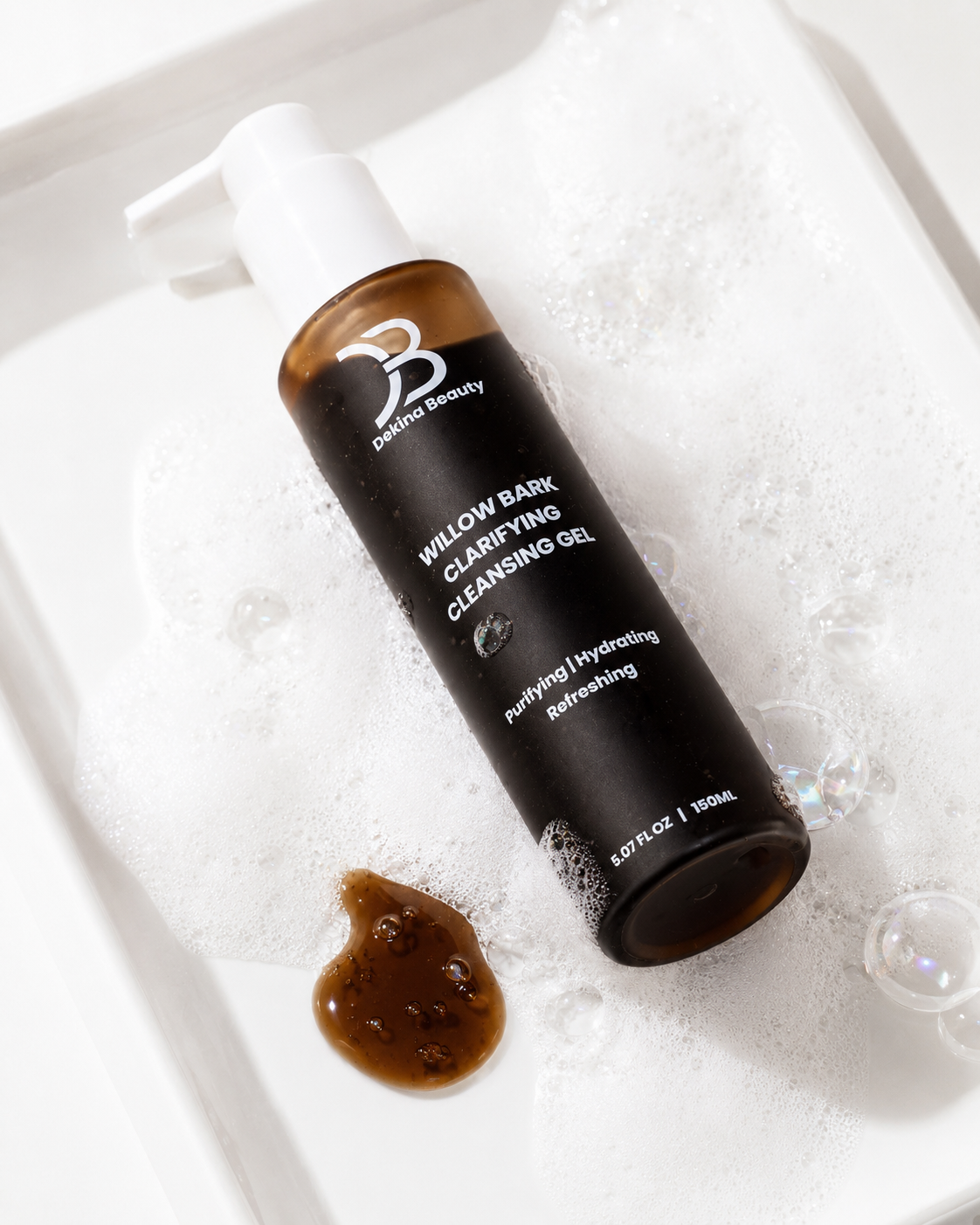
Willow Bark Clarifying Cleansing Gel
Licorice also appears in the cleanser alongside Willow Bark, Green Tea, Aloe Vera, Cucumber, Chamomile and Calendula.
Because a clarifying routine does not need to focus only on removing oil.
It can also be designed around skin that needs balance, comfort and more even-looking radiance.
Is Licorice Root Good For Post-Acne Dark Spots?
This is one of the places where Licorice makes the most sense in a routine.
Post-acne marks are connected to inflammation and excess pigmentation.
Licorice contains compounds studied in relation to both.
Reviews of treatments for hyperpigmentation in skin of colour specifically identify glabridin and liquiritin among the Licorice constituents of interest for pigmentation concerns.
But no ingredient works in isolation from your habits.
If you are:
Picking every pimple.
Skipping sunscreen.
Over-exfoliating.
Constantly irritating your skin.
You may continue creating new opportunities for pigmentation while trying to fade the old marks.
Does Licorice “Bleach” The Skin?
No.
Brightening should not mean changing your natural skin colour.
The goal is not less melanin everywhere.
The goal is helping areas of excess or uneven pigmentation look more balanced with the rest of your complexion.
When we talk about Licorice, Mulberry or Bearberry in Dekina Beauty products, we are talking about supporting:
• Post-acne dark marks
• Dullness
• Uneven-looking tone
• Areas of visible discolouration
• Overall radiance
Your natural complexion is not the problem being treated.
A Simple Routine For Uneven Tone
Morning
Cleanse
Willow Bark Clarifying Cleansing Gel
Brighten
Willow Bark Bright & Glow Serum
Moisturise
Willow Bark Ultra-Lightweight Brightening Face Milk
Protect
Broad-spectrum sunscreen
Evening
Cleanser
Willow Bark Balancing Facial Toner
Bright & Glow Serum
Ultra-Lightweight Brightening Face Milk
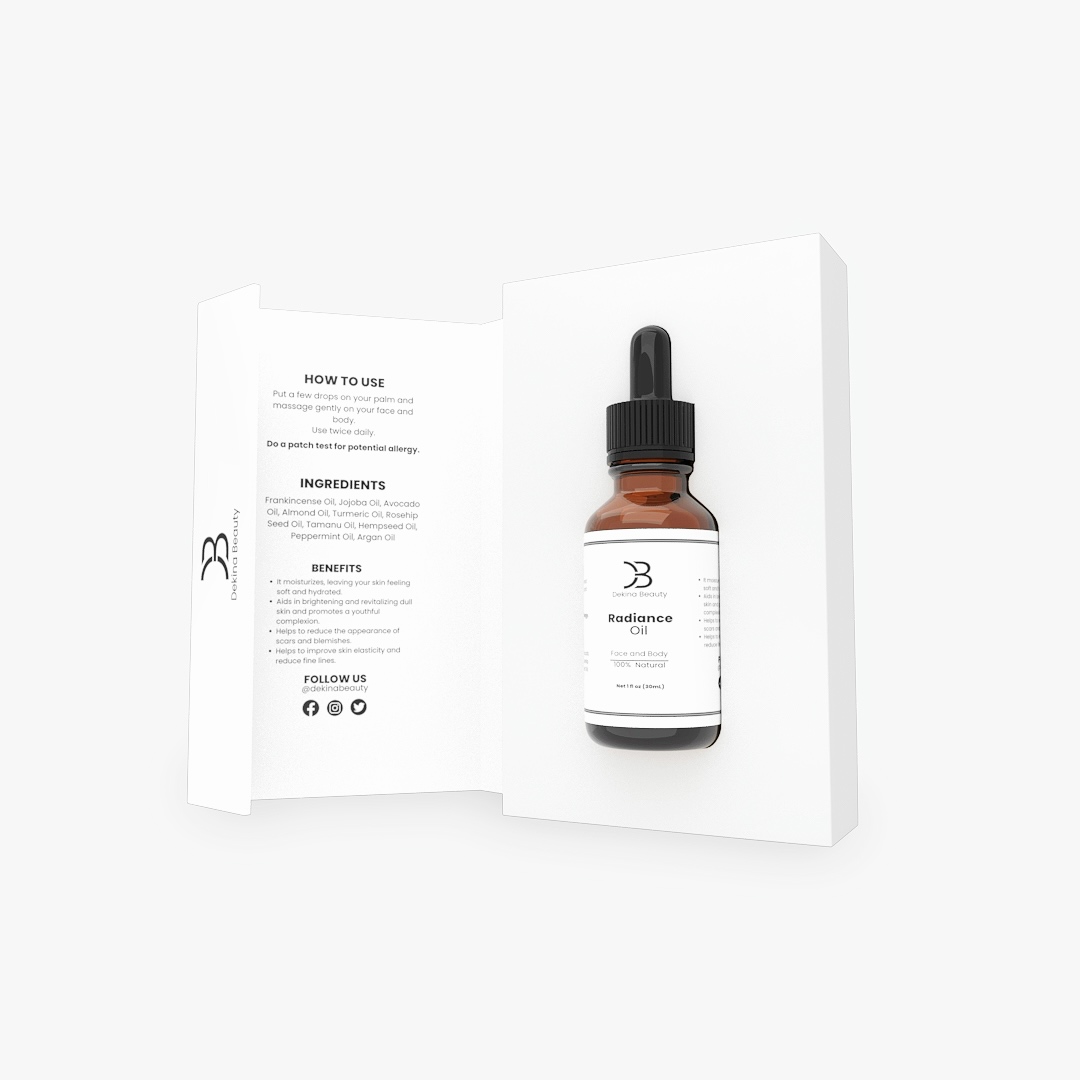
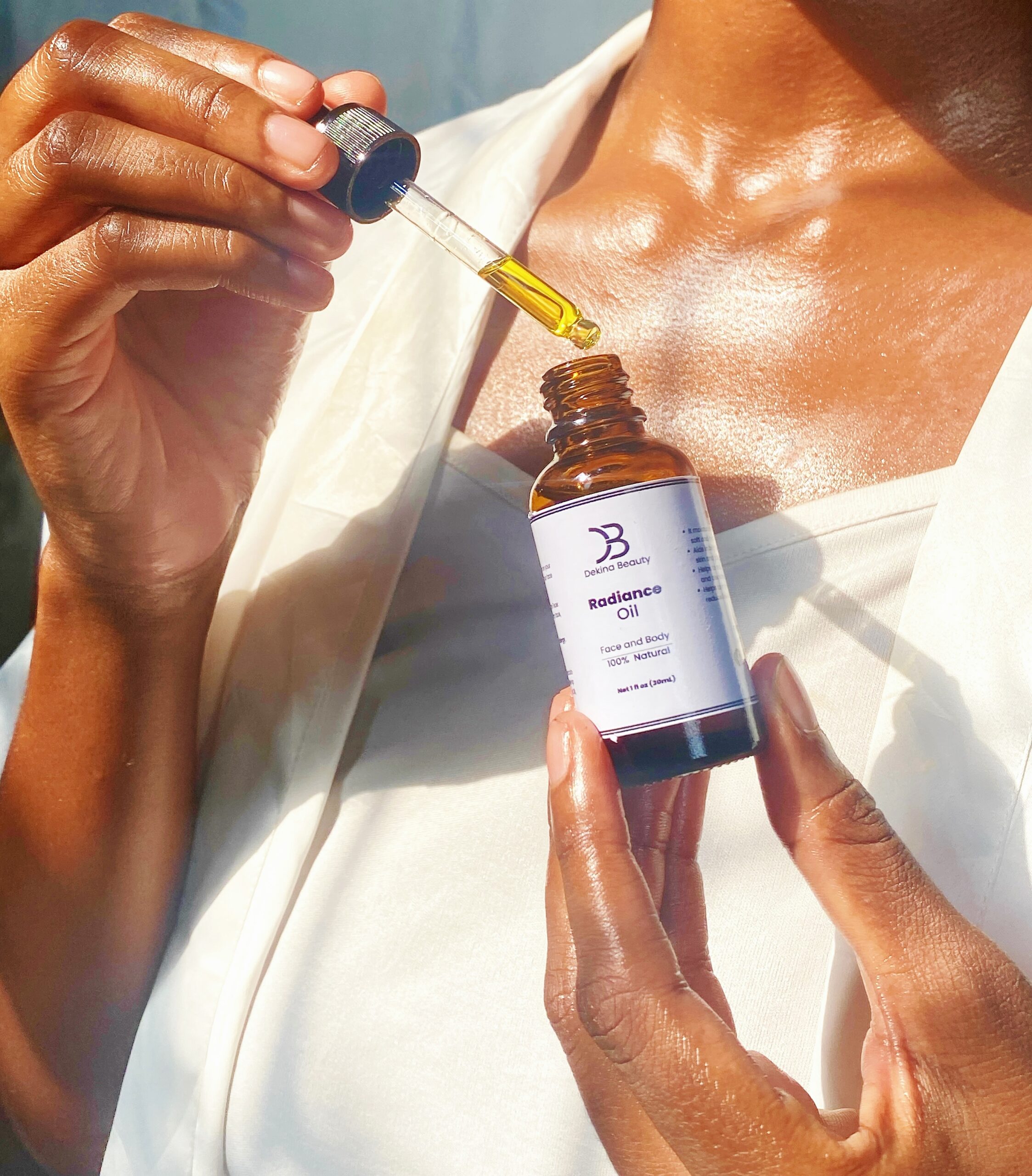
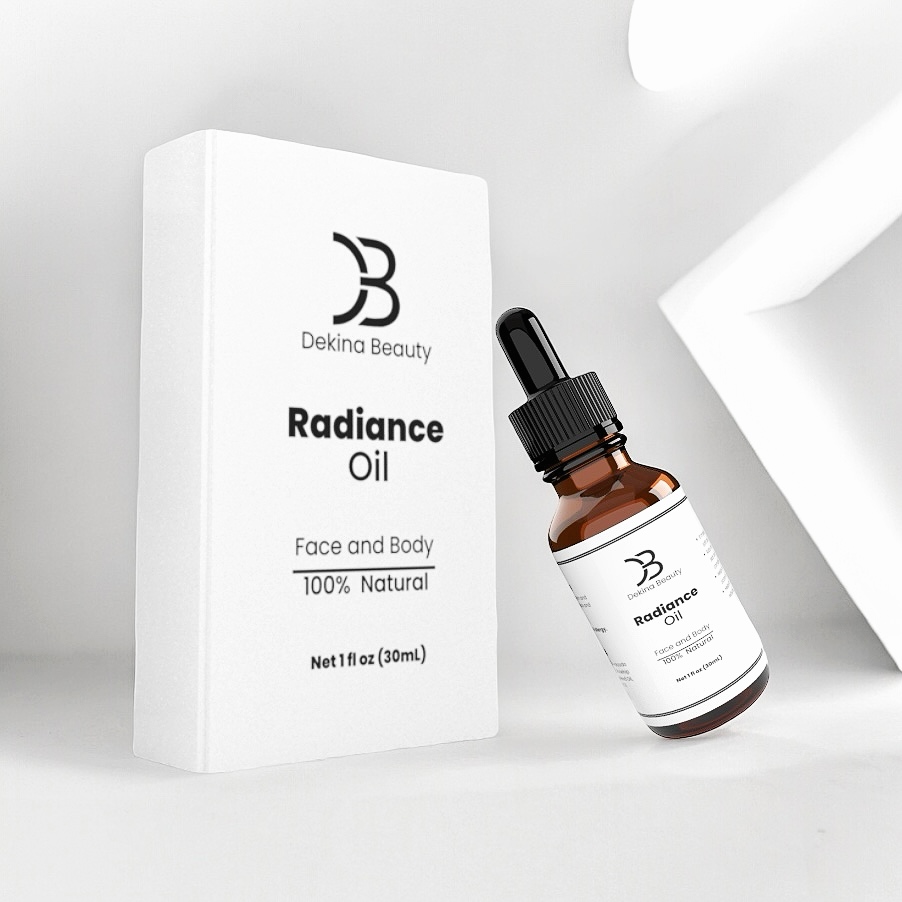
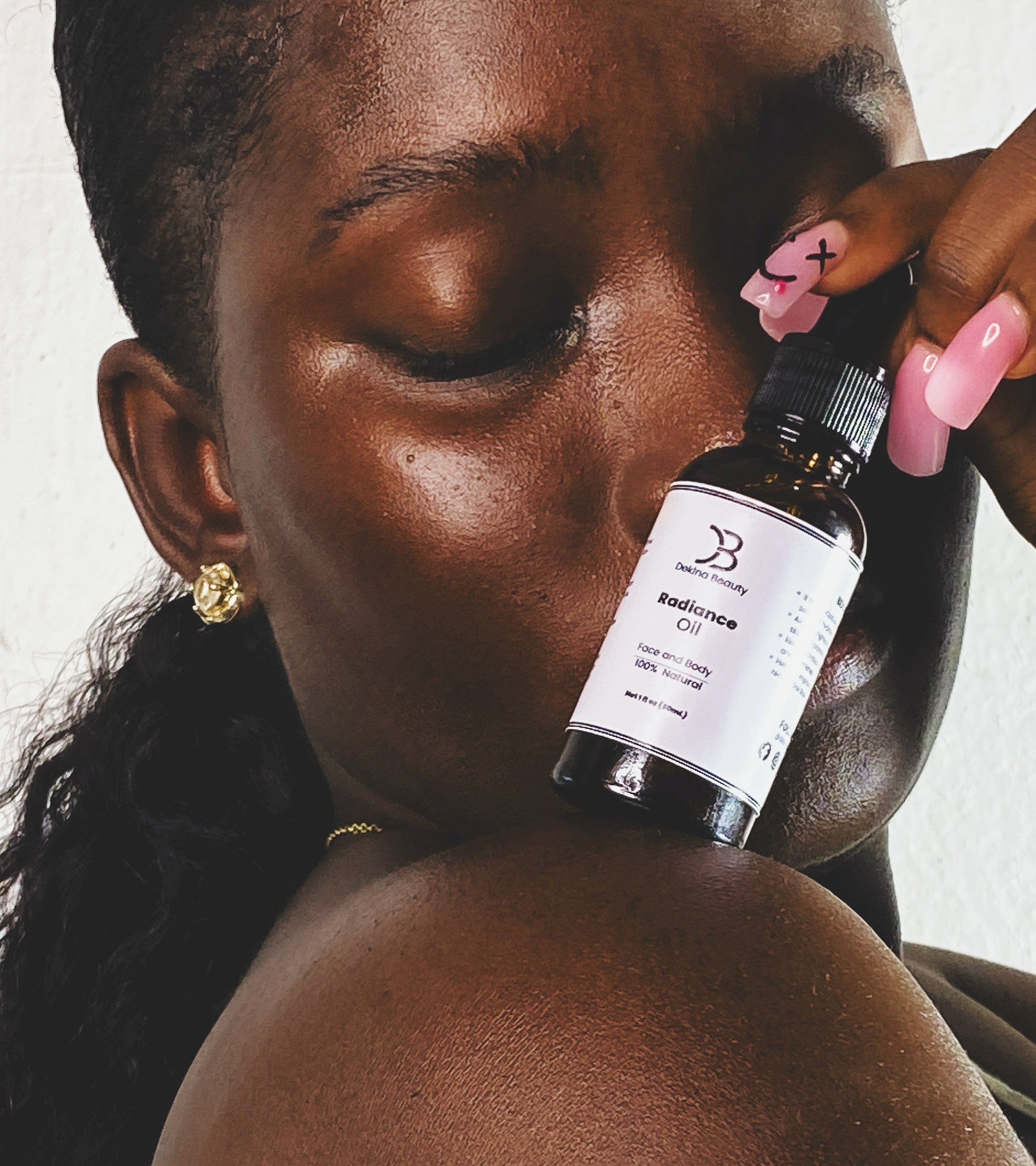
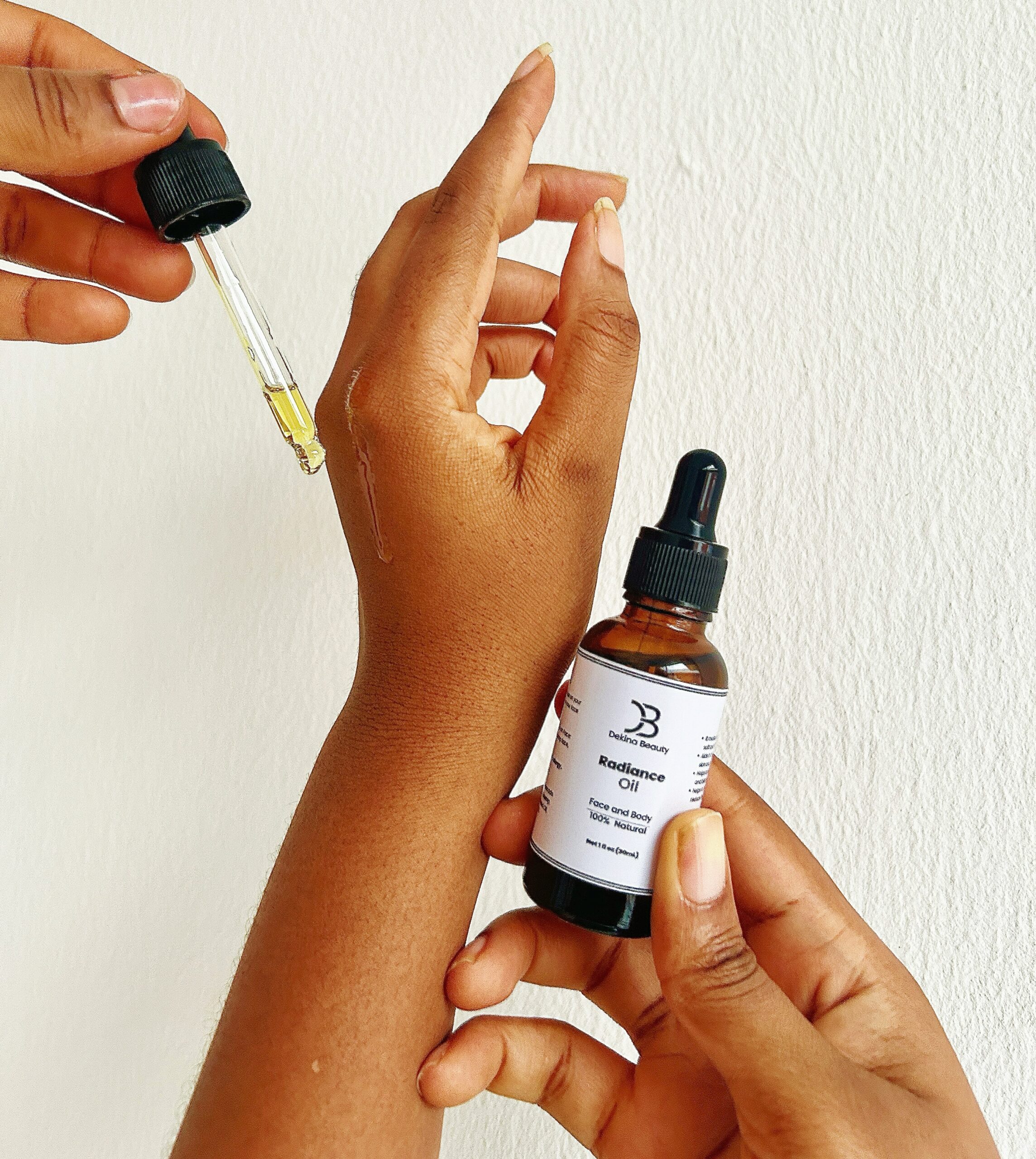
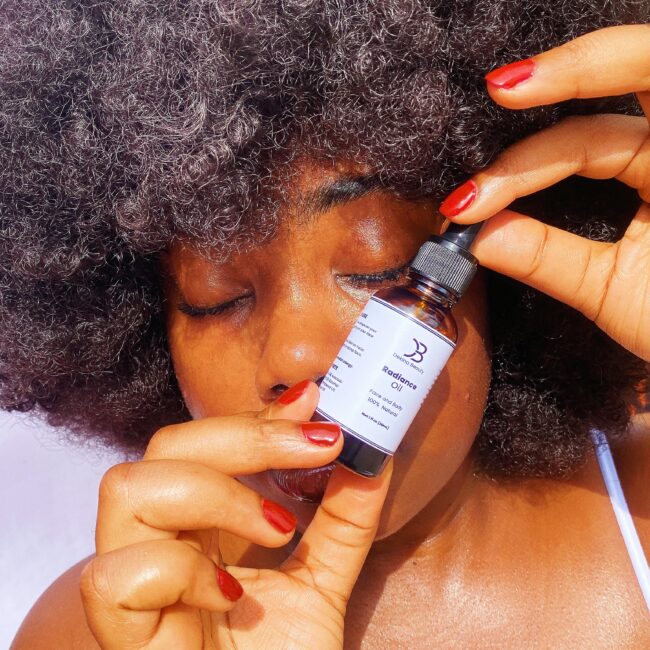
For skin that needs extra nourishment, finish with a few drops of Radiance Oil.
The real secret here is not using as many brightening products as possible.
It is using a balanced routine consistently.
The Takeaway
Licorice Root may not be the ingredient dominating every skincare trend, but that does not make it less interesting.
Its compounds tell a sophisticated skincare story.
Glabridin has been studied for its effects on tyrosinase, pigmentation pathways and inflammation.
Liquiritin appears to interact with pigmentation differently, including helping disperse melanin.
And that combination of brightening plus soothing support is exactly why Licorice makes sense in skincare designed for dark spots and post-breakout unevenness.
Sometimes the ingredient making the most noise is not the ingredient doing the most interesting work.
Licorice Root is a good example.