If your skincare shelf has started looking like a chemistry lab because you are trying to clear your acne, this is for you.
Acne-prone skin does not automatically need ten products, three acids, a weekly peel and a new routine every time TikTok recommends something.
In fact, one of the easiest ways to make an already difficult skin situation more confusing is to do too much at once.
A beginner acne routine should have one goal: create a simple routine you can follow consistently while keeping your skin clean, hydrated and protected.
That means starting with the basics, paying attention to how your skin responds and adding products intentionally rather than obsessively.
Dermatologists also recommend gentle skincare alongside acne treatment. Washing excessively, scrubbing the skin and constantly switching products can irritate acne-prone skin rather than helping it.
First, What Does Acne-Prone Skin Actually Need?
You do not need to “dry out” acne.
You also do not need to remove every trace of oil from your face.
Acne develops through a combination of factors including clogged pores, oil production and inflammation. Depending on the type and severity of acne, evidence-based treatments can include ingredients such as benzoyl peroxide, topical retinoids, salicylic acid and azelaic acid.
But your daily skincare routine still needs to support your skin while those concerns are being addressed.
Think of it this way:
Cleanse. Treat thoughtfully. Moisturise. Protect. Repeat.
Not attack.
The Simple Morning Routine For Acne-Prone Skin
Your morning routine should prepare your skin for the day without overwhelming it.
Step 1: Cleanse Gently
Start with a gentle cleanser that removes overnight oil, sweat and buildup without leaving your face feeling painfully tight.
For oily or acne-prone skin, “clean” should not mean squeaky.
Over-cleansing and repeatedly washing throughout the day can irritate acne-prone skin. Dermatologists generally recommend washing the face up to twice daily and after significant sweating.
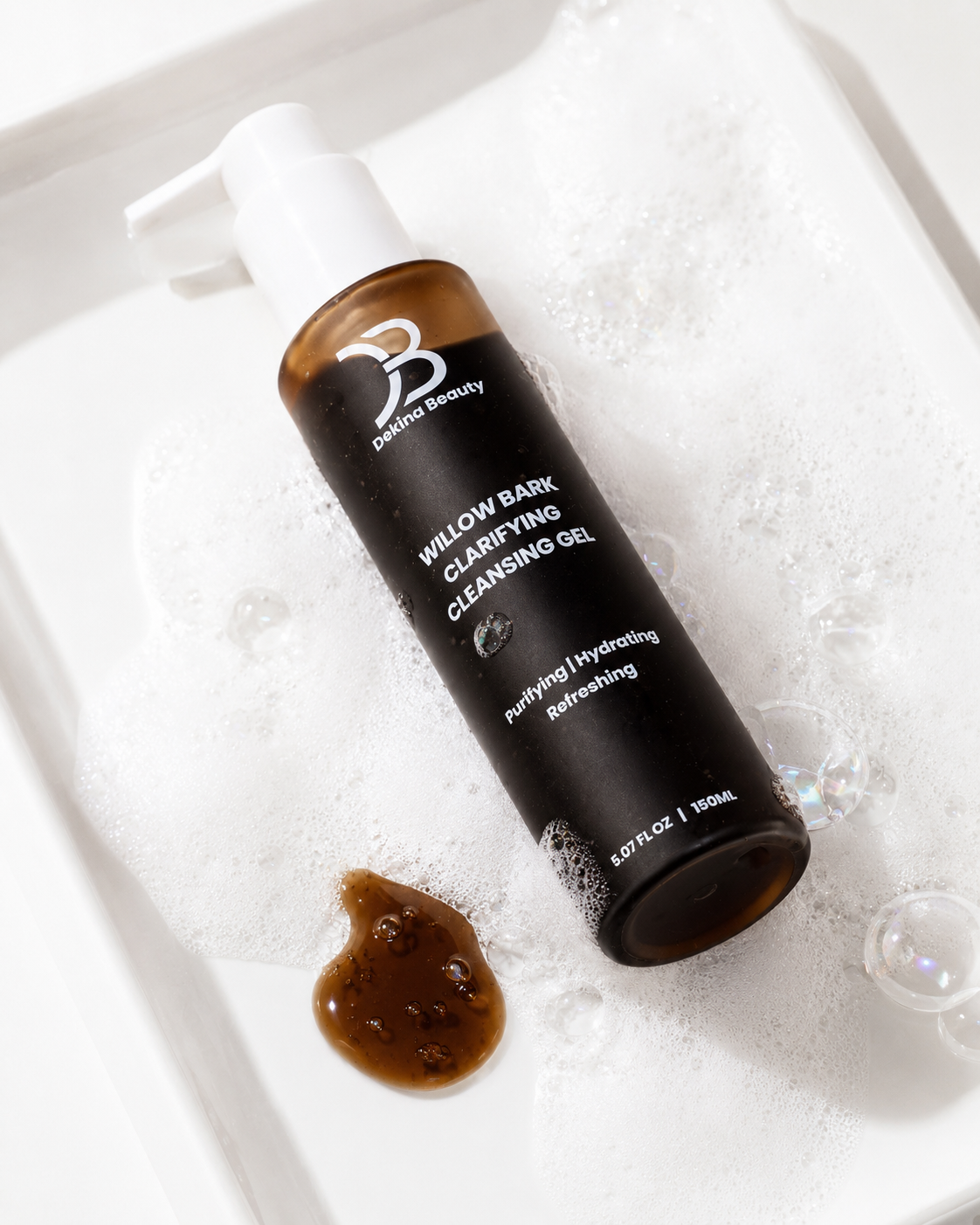
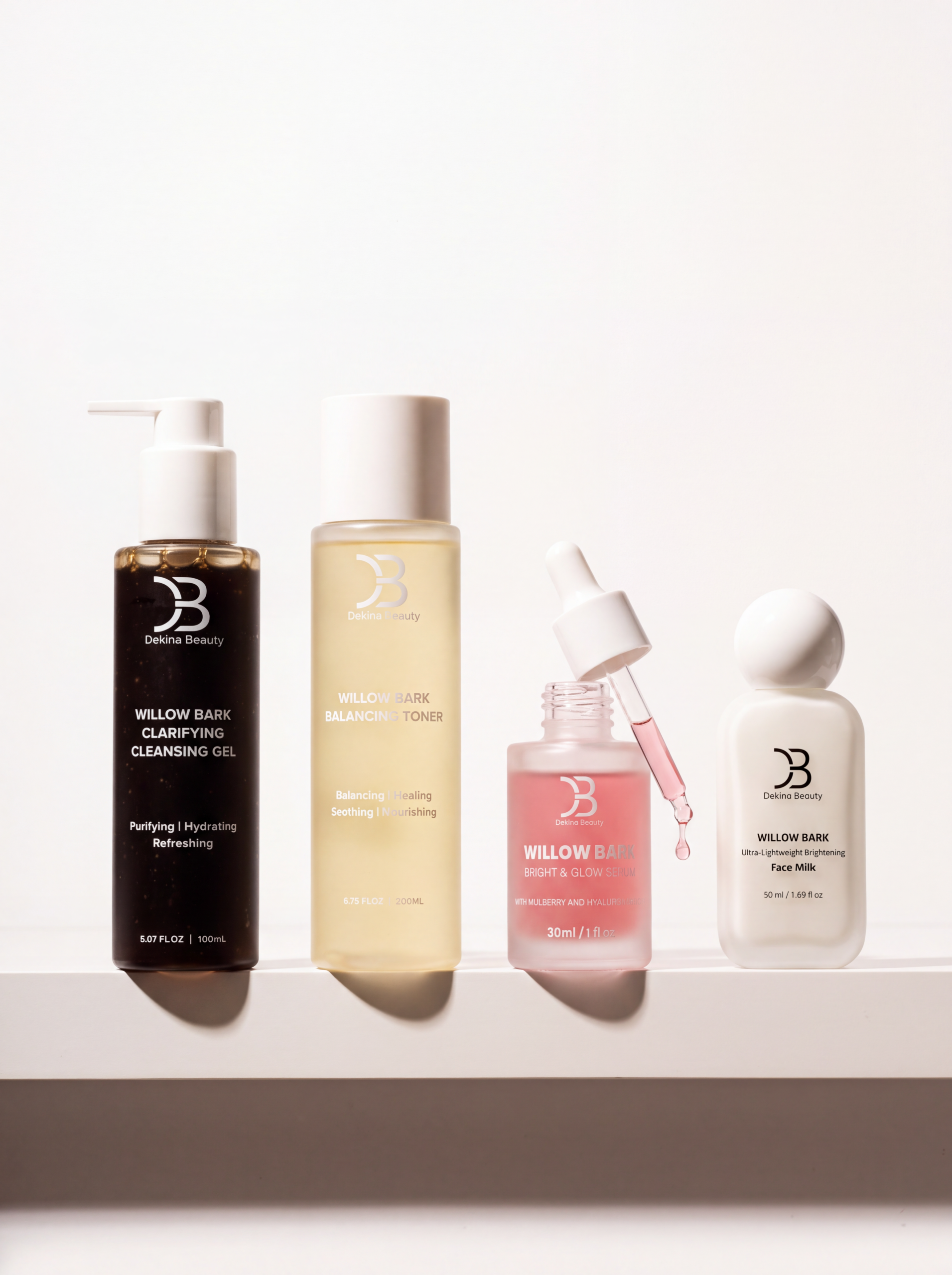
The Dekina Beauty Willow Bark Clarifying Cleansing Gel is designed as a pH-balanced everyday cleanser that removes excess oil and buildup while helping the skin feel refreshed rather than stripped.
Massage your cleanser gently over damp skin using your fingertips, rinse with lukewarm water and pat dry.
No aggressive face brush. No hard scrubbing.
Step 2: Add A Treatment Step Slowly
This is where beginners often make their biggest mistake.
You do not need several exfoliating acids, three brightening serums and two acne treatments in the same routine.
Start with one leave-on product and see how your skin responds.
If you are using the Willow Bark Balancing Facial Toner, introduce it gradually. It combines Willow Bark with hydrating and soothing ingredients such as Aloe Vera, Green Tea, Cucumber and Oat Extract.
You could alternatively make your serum the treatment-focused step.
The Willow Bark Bright & Glow Serum is designed for people who are concerned not only about breakouts but also about the uneven-looking tone and dark marks they may leave behind.
The important word here is gradually.
Your skin does not need to prove it can survive your routine.
Step 3: Moisturise — Yes, Even If Your Skin Is Oily
One of the most persistent acne myths is that oily skin does not need moisturiser.
It does.
Acne treatments can cause dryness and irritation, and the American Academy of Dermatology specifically recommends moisturiser as part of acne-friendly skincare, particularly when treatments such as benzoyl peroxide, salicylic acid or retinoids are being used.
Choose something lightweight if heavy creams make you uncomfortable.
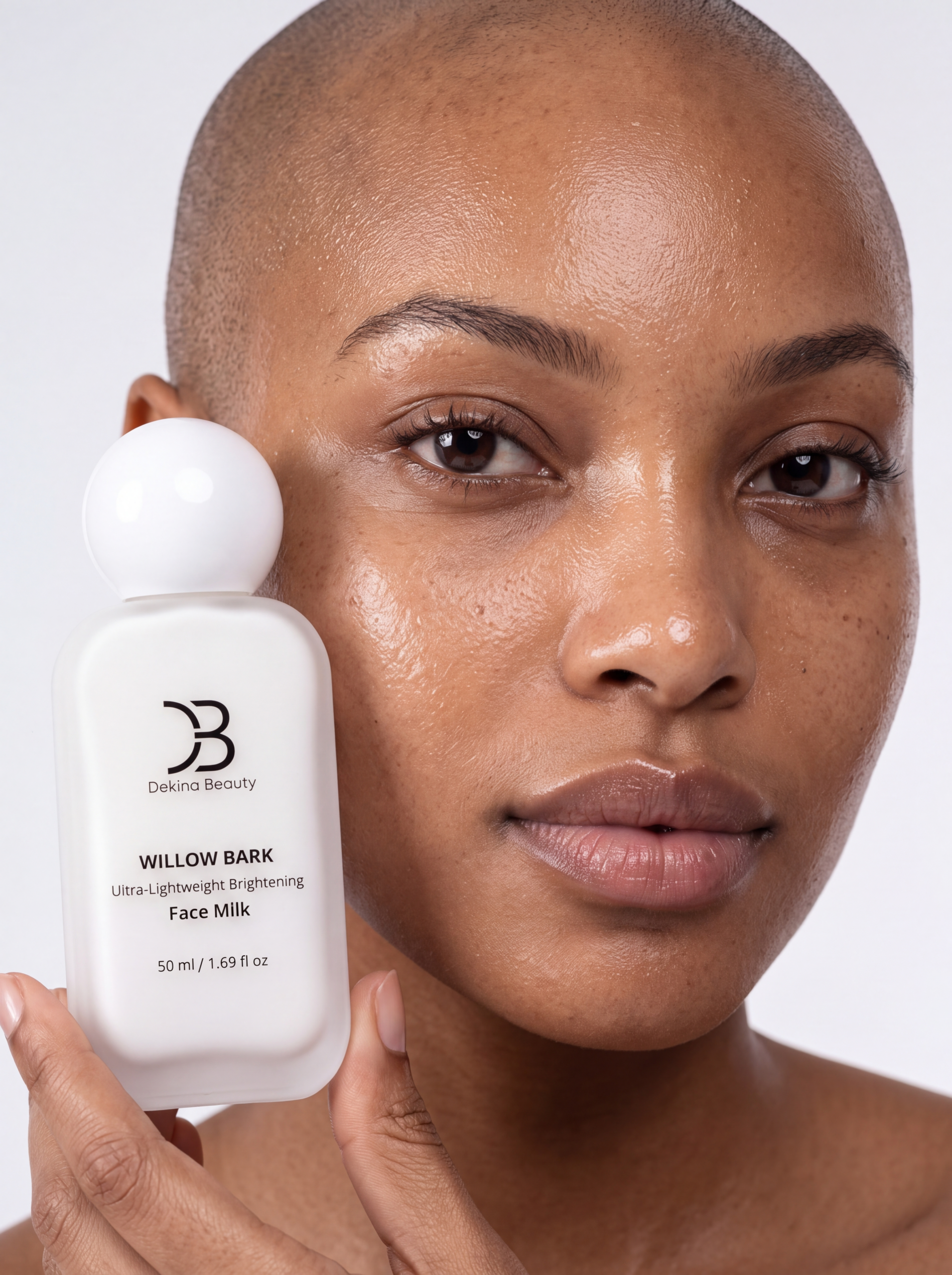
The Willow Bark Ultra-Lightweight Brightening Face Milk was created for exactly this type of routine. Its fluid texture provides hydration without the feeling of a rich, heavy cream.
One pump may be enough for oily skin. Dry or dehydrated skin may need slightly more.
The goal is not to make the skin greasy.
It is to keep it comfortable.
Step 4: Sunscreen Is Not Optional
If you have acne and you are also worried about dark spots, sunscreen deserves a permanent place in your morning routine.
This becomes particularly important for deeper skin tones because acne frequently leaves behind post-inflammatory hyperpigmentation, or the brown/dark marks that remain after the actual pimple has healed.
Sun and visible-light exposure can make hyperpigmentation harder to manage. Dermatologists recommend broad-spectrum SPF 30 or higher; tinted sunscreens containing iron oxide can provide additional visible-light protection that may be helpful for people prone to dark spots.
So your morning routine becomes:
Cleanser → Treatment or Serum → Face Milk → Sunscreen
Simple.
Your Evening Acne Routine Can Be Just As Simple
Nighttime is not permission to use every active ingredient you own.
Your evening routine can follow almost the same structure.
Cleanse
Remove sunscreen, makeup, oil, sweat and the day’s buildup with a gentle cleanse.
If you wear heavier makeup, you may need an appropriate first cleansing step before your regular facial cleanser.
Balance Or Treat
Apply your toner or treatment product depending on what your skin currently tolerates.
Beginners do not necessarily need both from day one.
If you eventually use the complete Dekina Clarifying Essentials routine, you can layer:
Cleanser → Toner → Bright & Glow Serum → Face Milk
But introducing the leave-on products one at a time makes it much easier to identify what your skin likes and what may be causing irritation.
Moisturise
Finish with your Face Milk.
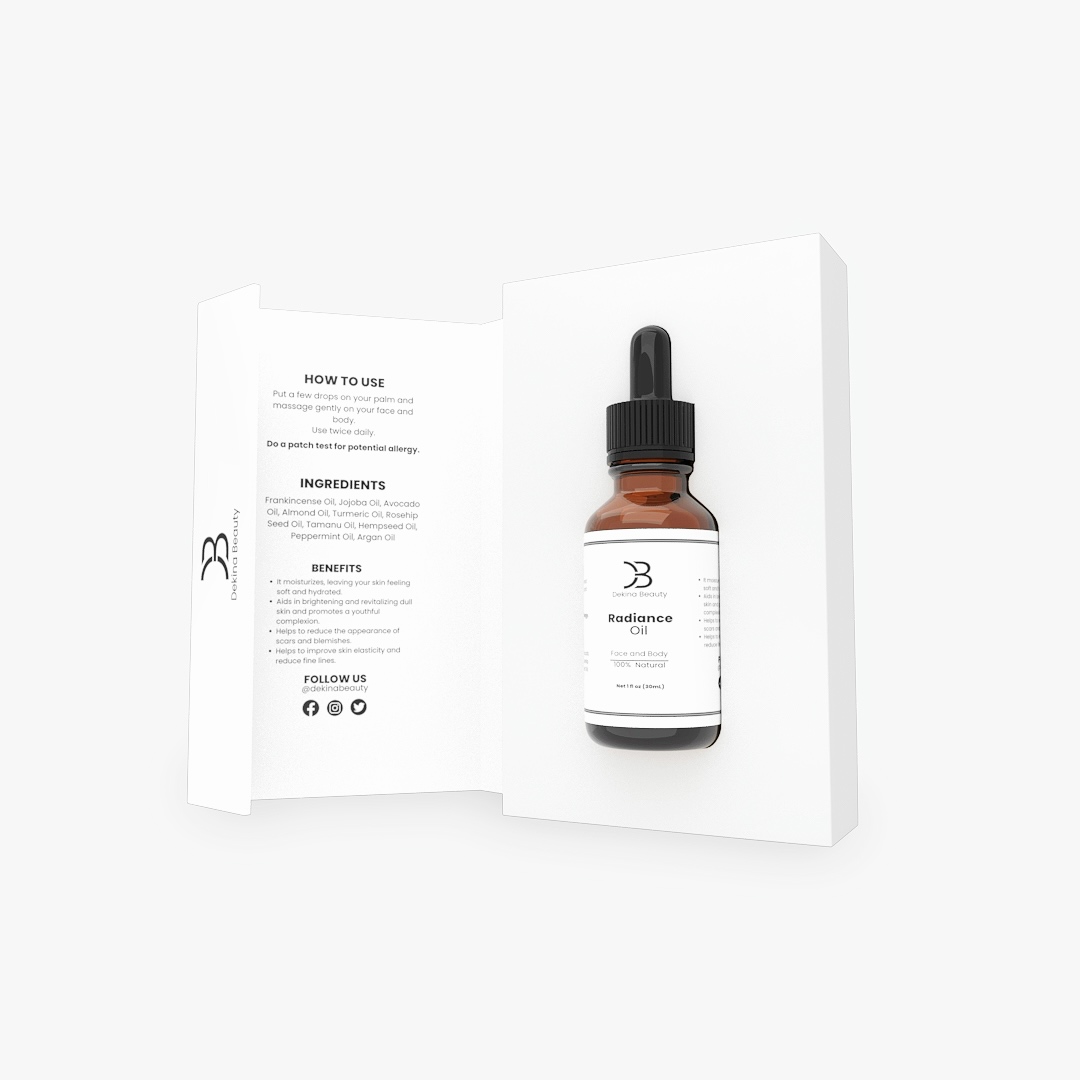
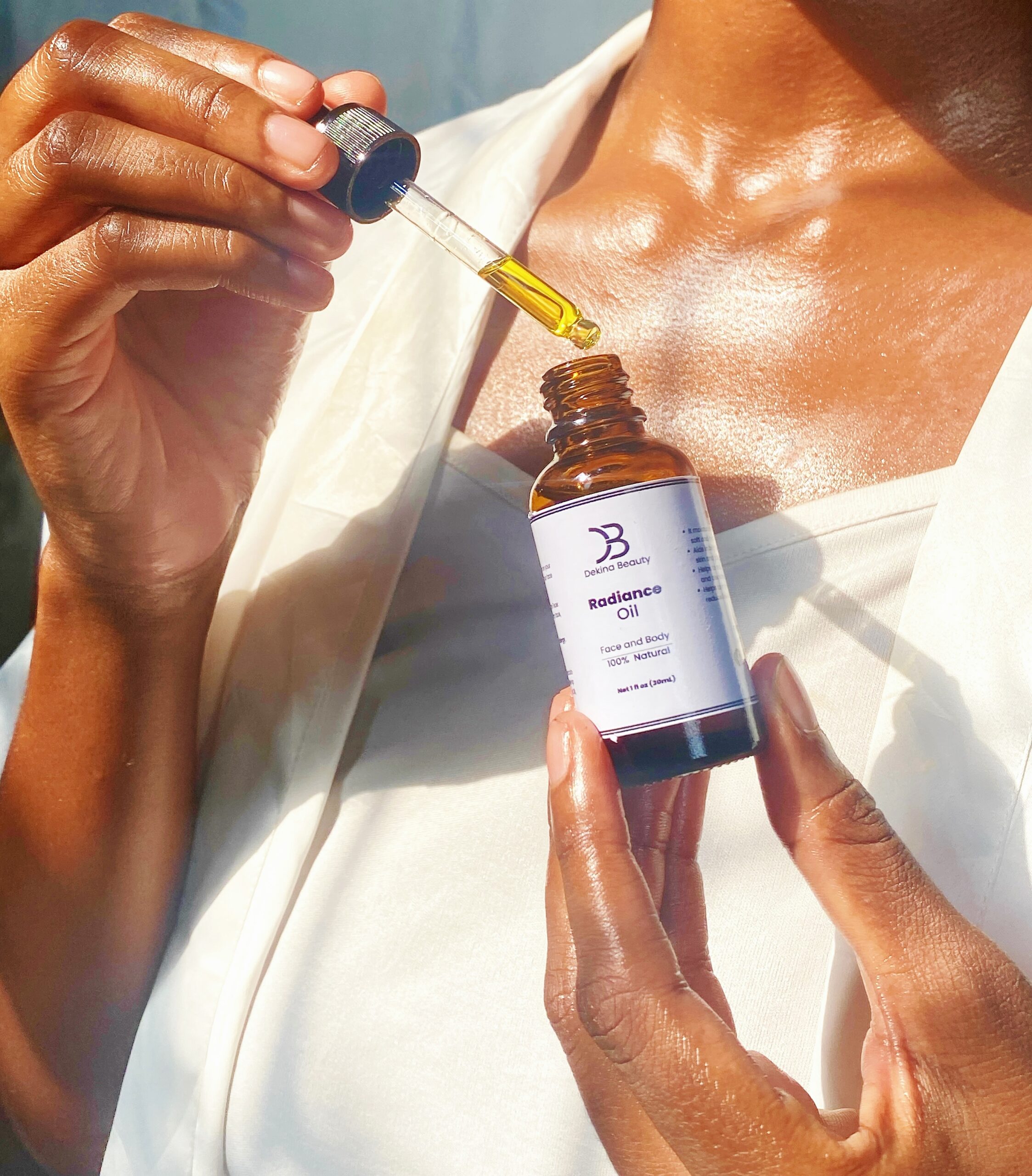
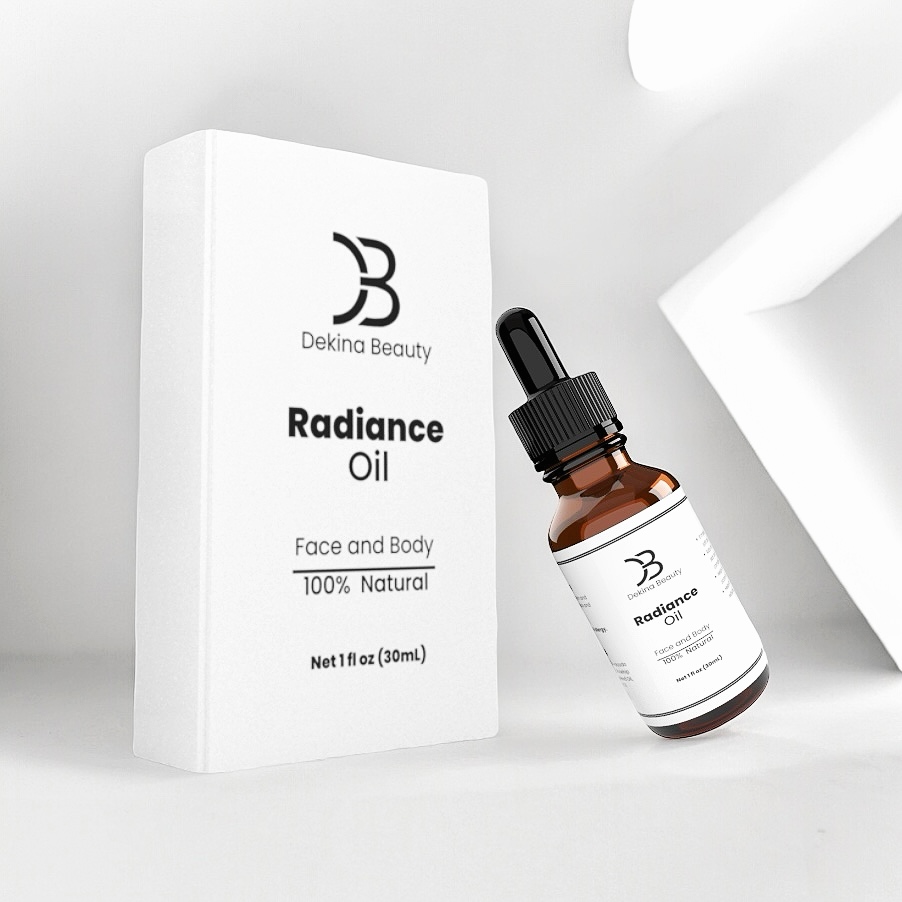
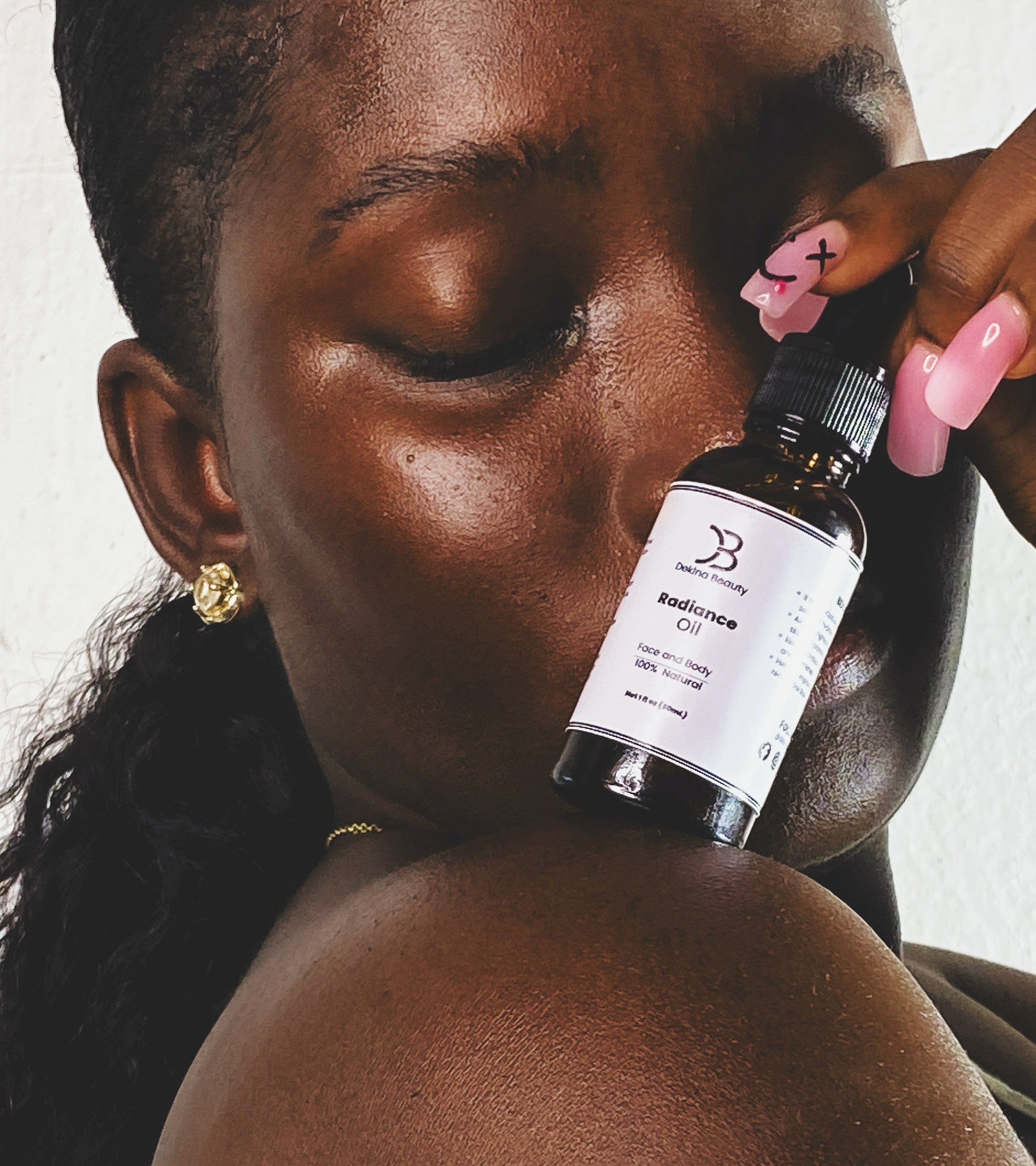
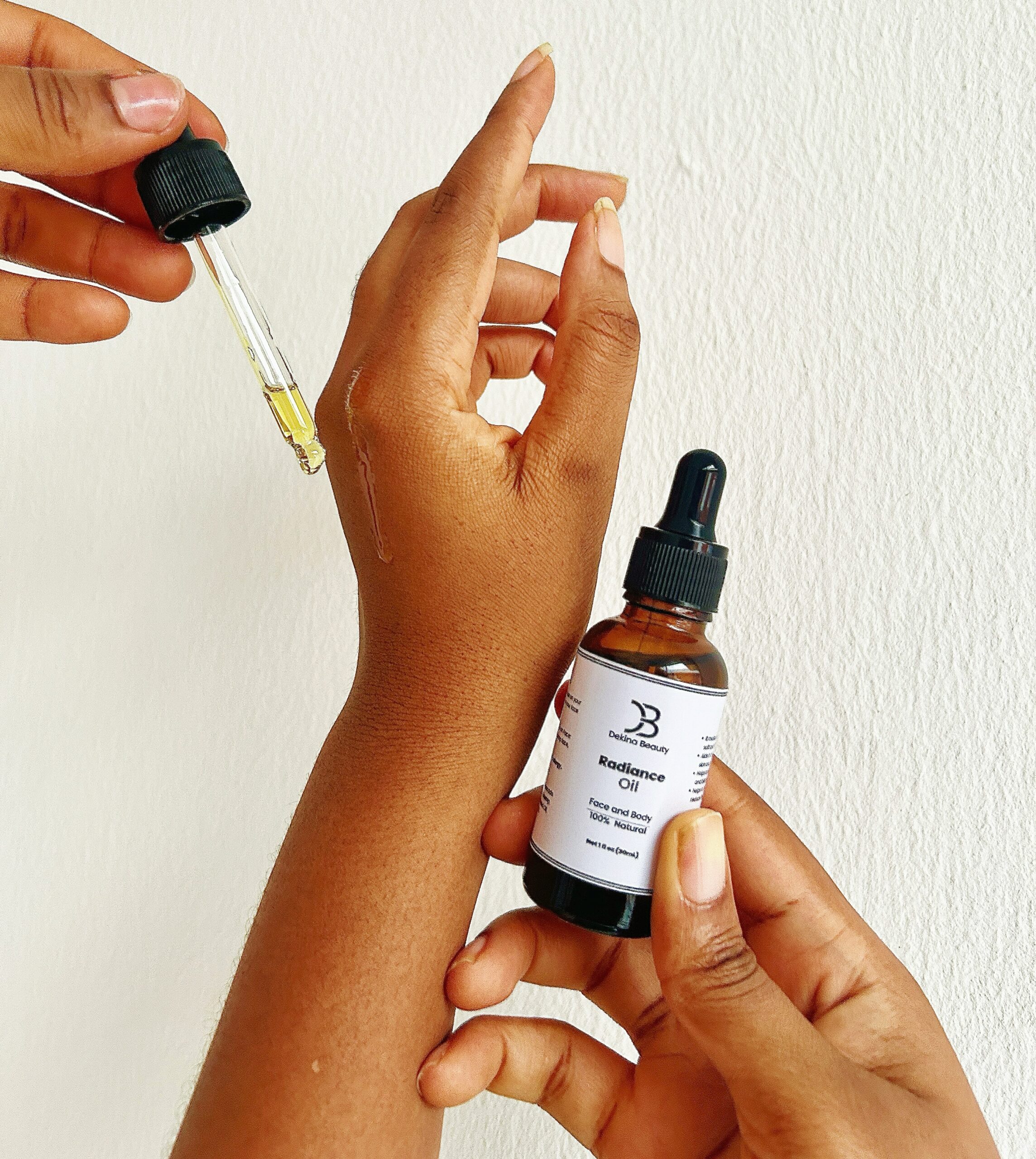
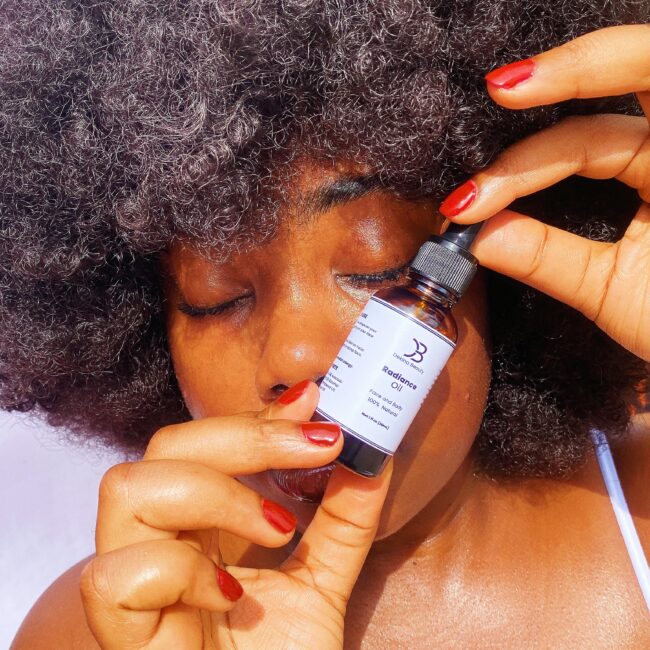
If your skin is naturally dry or needs more nourishment, you can occasionally seal in your evening moisturiser with a small amount of Radiance Oil.
Oily skin does not have to use facial oil simply because it exists in a routine.
Skincare should respond to your skin, not a checklist.
What About Individual Pimples?
Not every breakout requires you to change your entire routine.
For a surface-level whitehead, a hydrocolloid pimple patch can help absorb fluid while creating a physical barrier that makes it harder to pick at the blemish.
The Dekina Beauty Clear & Confident Hydrocolloid Pimple Patch can be applied to clean, completely dry skin and worn for several hours or overnight.
Apply the patch before toner, serum or moisturiser on that specific spot so it can adhere properly.
Stop Trying To Dry Your Acne Out
That burning, tight feeling after washing your face is not proof that your skincare is working.
Neither is peeling.
Neither is redness.
Repeatedly stripping or irritating the skin can make your routine harder to tolerate. Dermatologists specifically caution against scrubbing, excessive washing and deliberately drying out acne-prone skin.
You can have acne and dehydrated skin.
You can have acne and sensitive skin.
You can have acne and need moisturiser.
These things are not contradictions.
Do You Need A Toner If You Have Acne?
Not necessarily.
A toner is an additional skincare step, not a requirement for having clean skin.
A well-formulated toner can, however, provide hydration, soothing ingredients or targeted ingredients that complement the rest of your routine.
If you use one, choose it because of what the formula contributes to your routine, not because you believe pores need to be “closed” after cleansing.
And if your skin becomes irritated after adding it, reduce the frequency instead of forcing twice-daily use.
Acne And Dark Spots Are Not The Same Thing
This distinction matters, especially on melanin-rich skin.
The flat brown or darker marks left behind after a pimple heals are often post-inflammatory hyperpigmentation (PIH)rather than true acne scars. PIH can fade, although it may take time.
This is also why constantly picking pimples can become a cycle:
A breakout appears.
You pick it.
Inflammation increases.
The pimple eventually disappears.
A dark mark remains.
You then focus exclusively on fading the mark while new acne continues forming.
Managing the breakout and the resulting uneven tone together, without excessively irritating the skin, usually makes more sense. Dermatologists specifically highlight this approach for darker skin tones.
How Long Should You Give Your Acne Routine?
Not three days.
And probably not one week.
Acne skincare requires consistency. Dermatology guidance commonly recommends giving acne treatments approximately six to eight weeks before deciding whether they are working, although meaningful clearing may take longer.
That does not mean you should continue using a product that is causing significant burning, swelling or irritation.
It means that when your skin tolerates your routine, resist the urge to replace everything every two weeks because you saw another product online.
Take progress photos under similar lighting instead.
Skin changes are much easier to recognise over several weeks than when you inspect your face several times every day.
A Beginner Routine Does Not Need To Be Perfect
Some mornings you will only cleanse, moisturise and apply sunscreen.
That is still a skincare routine.
You do not need to perform skincare perfectly for it to be worthwhile.
What matters most is building something simple enough that you can actually continue doing it.
For many beginners, that might look like:
Morning: Cleanser → Serum → Face Milk → SPF
Evening: Cleanser → Toner or Serum → Face Milk
As your skin adjusts, you can decide whether additional steps are genuinely helping.
When Skincare Alone Is Not Enough
A good skincare routine can support acne-prone skin, but acne is also a medical skin condition.
If you have persistent acne that is not improving, painful deep bumps or cysts, widespread inflammation, or acne that is beginning to scar, consider seeing a dermatologist rather than continually adding stronger cosmetic products.
The AAD recommends professional evaluation for more severe acne and when standard treatments are not providing adequate results.
Your skincare routine should support appropriate treatment, not replace it.
The Takeaway
Your beginner acne routine does not need to become another thing to obsess over.
Start simple.
Cleanse gently.
Introduce targeted products gradually.
Moisturise.
Wear sunscreen.
Give your routine enough time to show you what it can do.
And most importantly, pay attention to your skin, not the number of products on your shelf.
Clearer-looking skin starts with consistency, not complexity.