If you have ever had acne in Nigeria, there is a good chance somebody has given you advice you did not ask for.
“Your face is dirty.”
“Use black soap.”
“Put toothpaste on it.”
“Stop eating groundnut.”
“Your skin is oily, why are you using moisturiser?”
“Just squeeze it.”
And somehow, everybody knows exactly what is wrong with your skin.
The problem is that acne is a real skin condition, and a lot of the advice passed around about it mixes personal experience, old skincare beliefs and half-truths.
So let’s separate what sounds convincing from what the evidence actually tells us.
Myth 1: Acne Means Your Face Is Dirty
The truth: Acne is not caused by poor hygiene.
Acne forms when factors such as excess oil, dead skin cells, inflammation and changes inside the hair follicle contribute to clogged pores and breakouts. Most of this process happens inside the skin, not because there is dirt sitting on the surface of your face.
This is why washing your face five times a day is not going to “wash the acne away.”
In fact, aggressive cleansing and excessive washing can irritate already inflamed skin. The NHS specifically notes that washing more than twice daily can aggravate acne.
What To Do Instead
Cleanse gently, usually morning and evening, with a cleanser appropriate for your skin.
Your face should feel clean and comfortable after washing, not painfully tight.
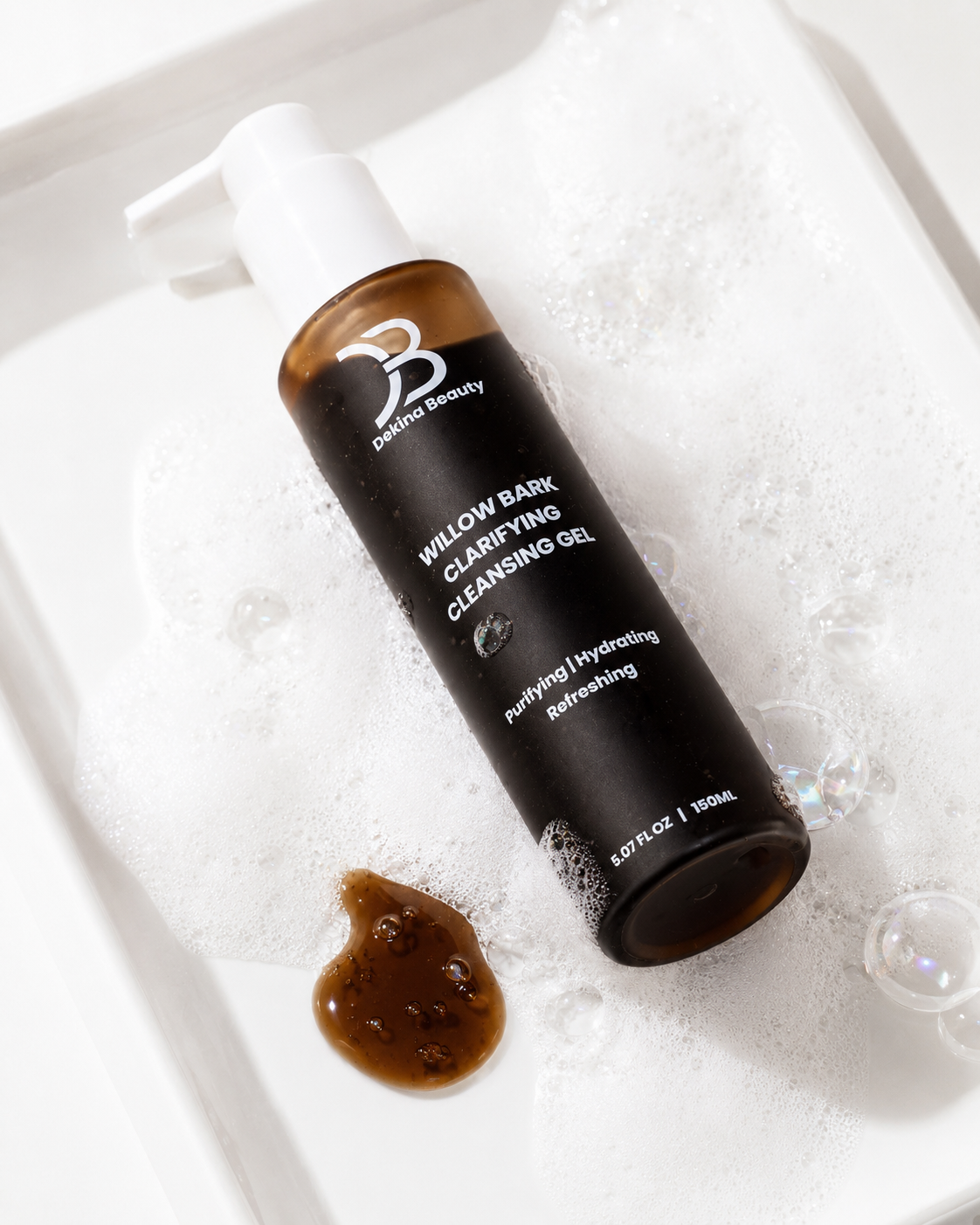
The Dekina Beauty Willow Bark Clarifying Cleansing Gel, for example, was formulated as a pH-balanced everyday cleanser that removes excess oil and buildup without the goal of stripping every trace of oil from the skin.
Clean skin does not need to feel squeaky.
Myth 2: The Stronger The Black Soap, The Faster Your Acne Will Clear
This one deserves nuance because African black soap itself is not automatically bad.
Traditional African black soap has a long history of use in West Africa, including Nigeria and Ghana, and research has found potentially useful antimicrobial and cleansing properties. At the same time, many of the claims made for black soap as an acne treatment, scar remover or cure remain insufficiently established.
The bigger issue is the assumption that:
burning + dryness + peeling = the product is working.
That is not how healthy acne care should be measured.
Different products sold as “black soap” can also have very different formulations. A cleanser that repeatedly leaves your face irritated or extremely dry may make your overall skincare routine harder to tolerate.
What To Do Instead
Judge a cleanser by what your skin needs, not by how strong it feels.
For acne-prone skin, aim for effective cleansing without repeatedly stripping or irritating the skin.
Black soap is a cleanser, not automatically a complete acne treatment.
Myth 3: Toothpaste Will Dry Out A Pimple Overnight
Please leave the toothpaste beside your toothbrush.
Toothpaste is formulated for teeth, not facial skin.
It can contain abrasives, flavouring agents and other ingredients that may leave the skin around a pimple more irritated, red or uncomfortable. Dermatologists specifically advise against using toothpaste as an acne treatment.
And even if a pimple feels “drier” the next morning, irritation is not the same thing as successful acne treatment.
What To Do Instead
Use skincare products designed for blemish-prone skin.
If you have a surface-level whitehead, a hydrocolloid patch can also be useful because it absorbs fluid while physically covering the blemish.
The Dekina Beauty Clear & Confident Hydrocolloid Pimple Patch is designed for this type of targeted care.
Your toothpaste has one job.
Let it do that job.
Myth 4: Oily Skin Should Never Use Moisturiser
This belief has probably left a lot of oily skin unnecessarily dehydrated.
Oil and water are not the same thing.
Your skin can produce plenty of sebum and still need hydration.
Moisturiser can be particularly helpful when acne treatments cause dryness or irritation. Dermatologists recommend choosing acne-friendly moisturisers labelled non-comedogenic or unlikely to clog pores.
What To Do Instead
If you dislike heavy creams, choose a lighter texture.
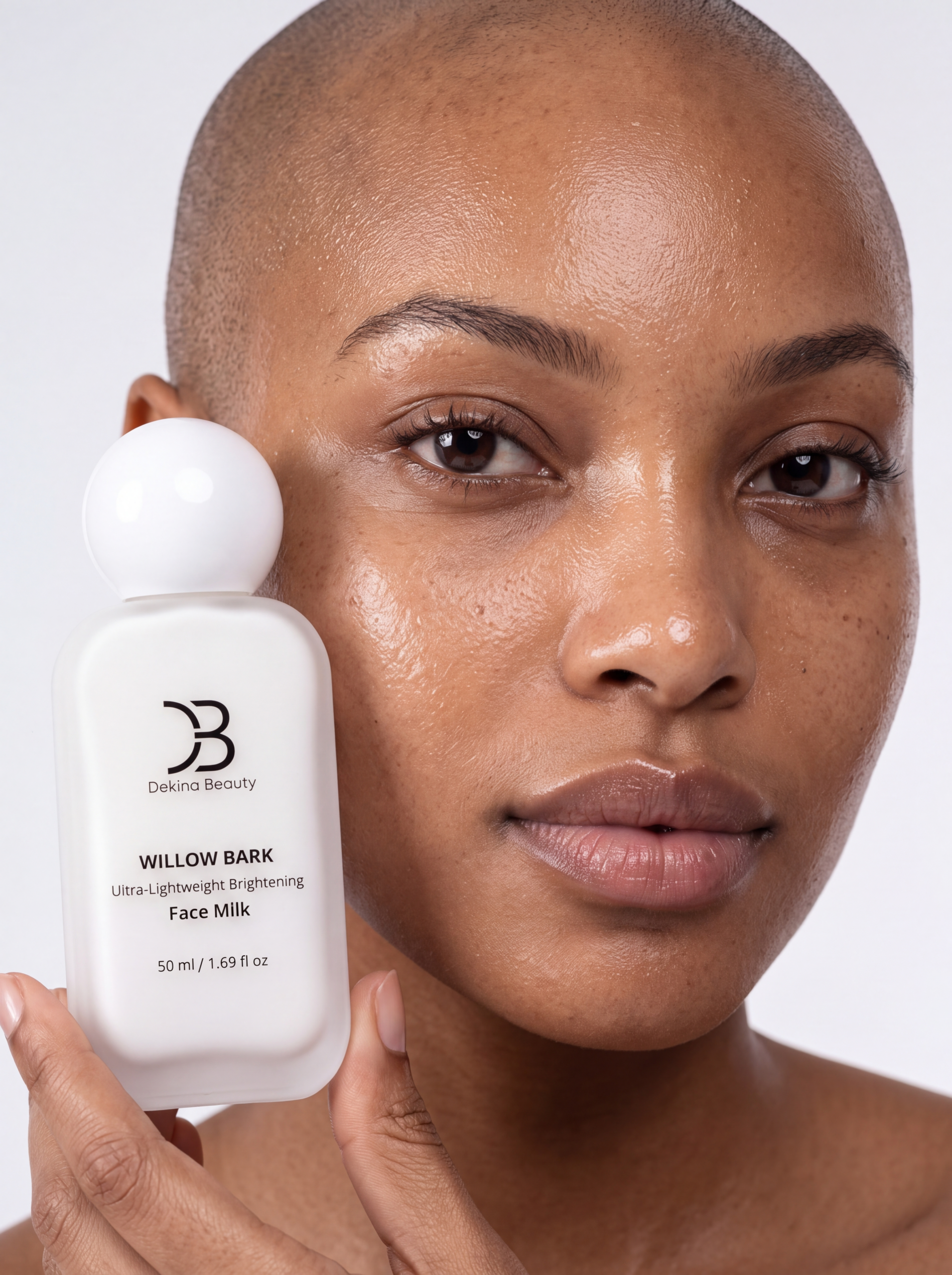
The Dekina Beauty Willow Bark Ultra-Lightweight Brightening Face Milk was created specifically to provide daily moisture without the feel of a heavy cream.
For oily skin, start with a small amount.
Moisturising your skin does not mean coating it in grease.
Myth 5: Squeezing A Pimple Gets Rid Of It Faster
We understand the temptation.
You see the whitehead.
It looks ready.
Your fingers are already moving.
But picking, squeezing and popping acne can increase inflammation and raise the risk of both scarring and post-acne dark marks.
This matters particularly for darker skin tones, which can be more prone to noticeable post-inflammatory hyperpigmentation after inflammation or injury.
What To Do Instead
Leave it alone where possible.
For an appropriate surface-level pimple, cover it with a hydrocolloid patch.
Sometimes the biggest benefit of a pimple patch is simply this:
your fingers cannot reach the pimple.
Myth 6: Every Dark Mark Left By Acne Is An Acne Scar
Not necessarily.
That flat brown, dark-brown or greyish mark left behind after a pimple heals may be post-inflammatory hyperpigmentation, commonly shortened to PIH.
PIH is a change in pigmentation following inflammation. It is different from textural acne scarring, where the skin has developed a depression or raised scar. Dark spots can gradually fade, although this may take months, and deeper pigmentation can take considerably longer.
This distinction matters because treating pigmentation is not exactly the same as treating a physical scar.
What To Do Instead
First, manage the acne causing new inflammation.
Then support the appearance of existing discoloration with a consistent routine and sun protection.
The Dekina Beauty Willow Bark Bright & Glow Serum contains brightening botanicals including Licorice, Mulberry and Bearberry extracts and is designed to help improve the appearance of dark spots and uneven-looking tone.
The goal should be to deal with both the breakout cycle and the marks it leaves behind.
Myth 7: Black Skin Does Not Need Sunscreen
Melanin gives darker skin some natural protection, but it does not make sunscreen unnecessary.
Sunlight and visible light can contribute to hyperpigmentation in darker skin tones, which is particularly relevant if you are already dealing with the dark marks acne leaves behind. Dermatologists recommend broad-spectrum SPF 30 or higher; tinted sunscreens containing iron oxides can provide additional protection from visible light that contributes to hyperpigmentation.
So if your routine is focused on fading dark spots but sunscreen is missing every morning, there is an important gap.
What To Do Instead
Your morning routine can be as straightforward as:
Cleanse → Serum → Moisturiser → Sunscreen
Yes, even in Nigeria.
Yes, even with dark skin.
And yes, even if you are indoors for much of the day but spend meaningful time exposed to daylight.
Myth 8: Acne Is A Teenage Problem
Unfortunately, acne did not sign a contract promising to disappear on your 20th birthday.
Adults can continue experiencing acne through their 20s, 30s, 40s and beyond, and some people develop acne for the first time as adults. Hormonal changes, stress, genetics and certain hair or skincare products can all play a role.
So being 28, 35 or 42 and still getting breakouts does not mean you somehow failed at skincare.
What To Do Instead
Treat what is happening with your skin now, rather than using the same assumptions you had about acne as a teenager.
Persistent or severe adult acne may also warrant professional evaluation.
Myth 9: One Particular Food Is The Reason You Have Acne
Depending on who you ask, the culprit might be:
Chocolate.
Groundnuts.
Fried food.
Milk.
Sugar.
Or apparently anything delicious.
The reality is more complicated.
Diet may influence acne in some people. Research suggests high-glycaemic eating patterns may worsen acne for some individuals, while cow’s milk has also been investigated. But the evidence does not support reducing acne to one universally “bad” food that everybody with pimples must avoid.
Acne has multiple contributing factors.
What To Do Instead
Notice patterns in your own skin.
If you consistently notice that a particular food seems to coincide with worsening breakouts, keep track of it rather than immediately eliminating half your diet based on somebody else’s experience.
And remember:
You cannot usually eat your way out of acne with fruit and water alone either.
Diet can be part of the picture without being the entire picture.
Myth 10: If A Product Burns, Tingling Means It Is Working
Skincare should not become an endurance test.
Burning, persistent stinging and significant irritation are not badges of effectiveness.
Irritation itself can also contribute to darker marks in melanin-rich skin. Dermatologists specifically recommend gentle skincare when managing hyperpigmentation because irritating products can worsen discoloration.
This is especially important if you are already using several products targeting acne and pigmentation.
More actives do not automatically equal faster results.
What To Do Instead
Introduce new products gradually.
Patch-test when appropriate.
Do not start four new leave-on products on the same night.
And if your skin becomes persistently painful, swollen, intensely itchy or severely irritated, stop experimenting and seek appropriate medical advice.
Bonus Myth: A Good Acne Product Should Clear Your Skin In A Few Days
Skincare marketing has not helped us here.
Real acne improvement usually takes time.
Dermatologists note that acne treatments may take around four to eight weeks before fewer breakouts are noticeable, with more substantial clearing taking longer.
Changing your entire routine every week because your skin has not transformed yet makes it difficult to know what is actually helping.
What To Do Instead
Take progress photos.
Use similar lighting.
Look at your skin over several weeks rather than several hours.
Consistency gives you information.
Constantly changing products does not.
So, What Does Acne-Prone Skin Actually Need?
For many people, the foundation is much less dramatic than social media makes it seem:
Cleanse gently.
Remove excess oil, sunscreen and buildup without stripping your skin.
Treat intentionally.
Choose products that address your actual concerns rather than layering everything marketed for acne.
Moisturise.
Keep your skin comfortable and support its moisture barrier.
Protect.
Wear sunscreen, especially when dark spots and uneven pigmentation are concerns.
Give it time.
Do not judge a routine after three nights.
For someone beginning with Dekina Beauty, a straightforward routine could be:
Morning:
Willow Bark Clarifying Cleansing Gel → Bright & Glow Serum → Ultra-Lightweight Brightening Face Milk → Sunscreen
Evening:
Willow Bark Clarifying Cleansing Gel → Balancing Facial Toner or Bright & Glow Serum → Ultra-Lightweight Brightening Face Milk
A hydrocolloid pimple patch can be added only when needed for suitable surface-level blemishes.
You do not need to use every product you own every single night.
When It Is Time To See A Dermatologist
Skincare can help support acne-prone skin, but acne is also a medical condition.
Consider seeing a dermatologist if you have deep or painful acne, recurring cysts or nodules, acne that is beginning to scar, significant persistent pigmentation, or breakouts that are not improving despite consistent treatment. Store-bought skincare alone may not be enough for these forms of acne.
There is no prize for trying to treat severe acne completely by yourself.
The Takeaway
Acne is frustrating enough without adding misinformation to it.
Your face is not automatically dirty because you have pimples.
Your skincare does not need to burn.
Your oily skin can still need moisturiser.
Toothpaste belongs on your teeth.
A dark mark is not automatically a scar.
And having melanin does not make sunscreen irrelevant.
The best acne routine is rarely the harshest or the most complicated.
It is the one that addresses your skin’s needs, protects it from unnecessary irritation and is simple enough to use consistently.
Clear skin does not require punishment. It requires understanding.